

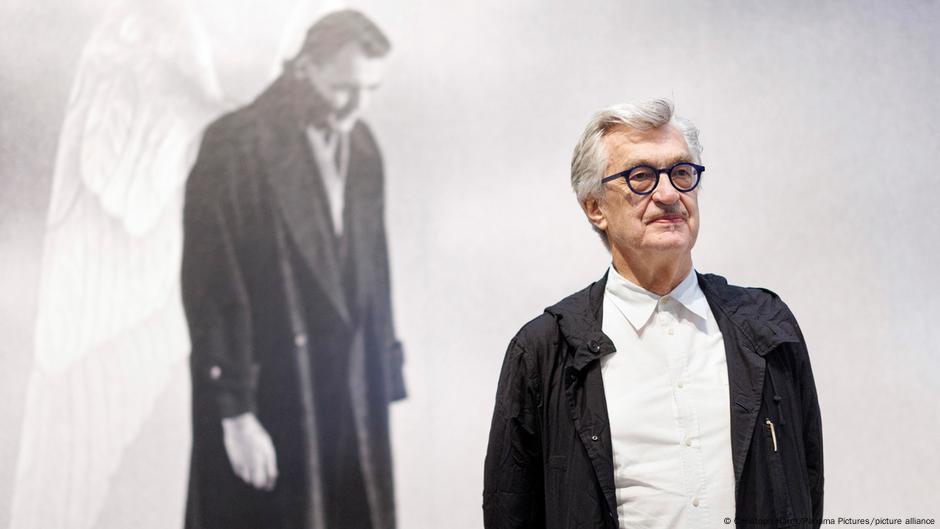
Introduction to Wim Wenders
For Wim Wenders, being lost is not a failure, but a form of bliss. "If you are lost, you really lose yourself and you to yourself and you Are There," he said. For over five decades, the German filmmaker has invited the audience to get lost in his films, which drift through unknown landscapes and calm emotional spaces.
A Hiker Born in the Middle of Ruins
Wenders was born in 1945 in Düsseldorf, towards the end of the Second World War, and grew up in a city that was almost exclusively reduced to rubble. The movement for Wenders was never just about distance – it was about discovery. He often describes himself as a traveler and remembered the surreal contrast between Germany after the war and the distant places that he discovered by his grandfather’s encyclopedia and his father’s newspapers.
Streets to Revelations
Wenders began making films in the 1970s and developed as a key figure in the new German cinema movement. His street film trilogy – "Alice in the cities", "The wrong train" and "kings of the street" – researches one of his central themes: people in motion, emotionally and physically, are looking for connection or belonging. His international reputation was determined by "Paris, Texas" (1984), an urgent research of loss and redemption in the American southwest.
Loneliness and Sound
Recently, "Perfect Days" (2023), a quiet character study in Tokyo, follows a caretaker whose simple routines show joy, isolation and the holiness of everyday life. The film won Koji Yakusho the best actor prize in Cannes and was selected as a Japanese official entry for the 2024 Academy Awards. Music has always played a crucial role in the work of Wenders, with examples including the "Buena Vista Social Club" (1999) and U2’s "Stay (far from, so close!)".
The Art of Seeing – Through Loss
Beyond film, Wenders is a productive photographer known for strong pictures of abandoned rooms, overlooked corners, and long, quiet streets. His photography reflects his filmmaking and focuses on emptiness, silence, and dignity of the room. Wenders’ own explorations are continued, with several trips to China and a recent visit to India. He believes that getting lost is an important part of understanding a city and oneself.
The Importance of Getting Lost
Wenders remembered the past era when it was possible to deliberately lose oneself in new cities. "I tried to lose myself in all big cities in the world when I got there for the first time. And when I managed to get lost, I think I really understood the city – but only then," he said. With GPS on every phone and maps everywhere, it really feels that it is all the more important for Wenders. "If you are lost, you will see," he said. "If you have your map and know your way, you don’t see as much as if you are lost."
Conclusion
Wenders’ work speaks for everyone who has ever felt out of place, or longs for a little more. His stories remind us that we can find new ways through loss – not just the world, but ourselves. The art of seeing is an important part of Wenders’ work, and his films and photographs continue to inspire and educate audiences around the world.
