

Introduction to UNESCO World Heritage Sites
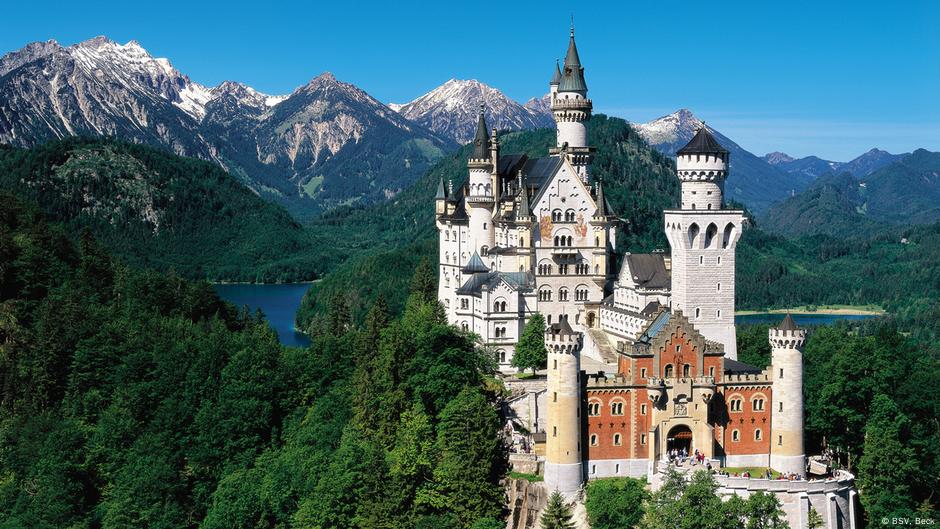
In just a few days, the palaces of King Ludwig II of Bavaria were included in the list of UNESCO World Heritage Site. In addition to 31 other sights around the world, Neuschwanstein Castle, Linderhof Palace, the King’s House on Schachen and the Herrenchiemsee Palace complex were nominated for recording. Decisions are made at the 47th meeting of the Weltkulturerba Committee in Paris.
The Bavarian Palaces
The Bavarian palaces of King Ludwig II have been at the head of Germany’s wish list for newcomers for ten years. Neuschwanstein Castle is high above the edge of the Alps and is one of the most famous buildings in Germany. With its many towers, it looks like something from a fairy tale. This "dream in stone" draws more than 1 million visitors from all over the world every year. Commissioned by King Ludwig II of Bavaria, the construction of Neuschwanstein Castle began in 1869. This picturesque palace of the state of Bavaria is also famous for its pompous interior design.
Many German World Heritage Sites
From the Aachen Cathedral to the Zollverein Coal Mine industrial complex, more than 50 German World Heritage locations have been listed since the 1970s when UNESCO said goodbye to the World Heritage Congress. At that time, the catalyst was the loss of cultural artifacts during the Second World War. However, the decisive factor was the construction of the Aswan High Dam of the Egyptian government in the 1960s, which would have flooded Abu Simbel’s world-famous temples. The agreement that has ratified around 195 countries is commissioned to protect the cultural and natural sights of universal value. There are currently 1,223 World Heritage Sites, of which 952 cultural heritage and 231 natural heritage are.
Global Nominations
The perspective of the World Heritage Consumption extends far beyond Germany. This year, a total of 32 cultural sights from countries around the world were nominated, including the old Khuttal region in Tajikistan, the Royal Caribbean city harbor in Jamaica, the modernist center of Gdynia in Poland, and the memorials for the victims of the Khmer Rouge in Cambodia.
Indian Fortresses
India has nominated an ensemble of old fortresses as a World Heritage Site. These impressive castles in the Maharashtra and Tamil Nadu states represent the military power of the Maratha Empire, which controlled large parts of the Indian subcontinent from the 17th to 19th century.
Other Nominations
The United Arab Emirates nominated the Faya Palaeolandscape as a remarkable example of a desert landscape of the Stone Age. South Korea submitted the Daegokcheon Stream Petraoglyphic, which are mysterious pre-historical rock engravings. Russia decided on the rock paintings in the Shulgan-Tesh cave in the southern Ural Mountains, which are older than 20,000 years. And China submitted the western Xia imperial graves, an example of the cultural heritage of the Tangut civilization and one of the world’s largest necropolises.
Criticism of UNESCO Ranking
The list of the UNESCO World Heritage Site currently comprises 1,223 cultural and natural culture locations in 168 countries, 56 of which are at risk of destruction. The global ranking was particularly widespread in scientific circles. The anthropologist and World Heritage expert questioned the decision-making process by quoting his research on the consequences of the World Heritage Location for the affected regions. The most common effect is mass tourism. "The local population could benefit from this, but often the negative consequences predominate by far the positive,"
Threats to World Heritage Sites
The Weltkulturer Komitee, which consists of elected representatives of the 21 Member States of the World Heritage Convention, will also discuss the growing threat to existing World Heritage locations in Paris. Like threats from armed conflicts in Ukraine and in the Middle East or from natural disasters, pollution, poaching, or uncontrolled tourism. According to a recently carried out study by UNESCO and The World Resources Institute, water shortages and floods are currently almost three quarters of all World Heritage locations. One of five sights is in a circulation of water shortages and floods. This includes the Taj Mahal in India, which is endangered due to a decline in groundwater levels. After massive floods in 2022, Yellowstone National Park in the USA had to be closed.
Conclusion
In the meantime, in the Bayermay Castle Neuschwanstein in Bavaria, the decisions made in Paris are eagerly awaited. If the palace is recognized as a World Heritage Site, it will probably attract even more tourists. However, what the Bavarian administration of palaces feels more important is, however, the global recognition that would go hand in hand with the award.
