

Introduction to European Capitals of Culture
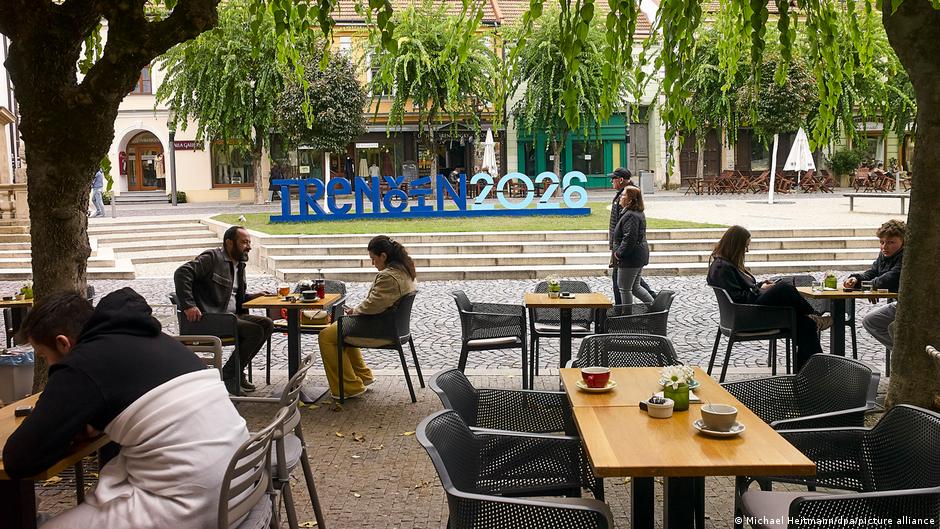
Trencin is a picturesque town in western Slovakia, best known for its historic castle that sits on a rock overlooking the town. Below, the city center is nestled around a large square with cafes and bars. The Old Town is also home to a magnificent synagogue, recently renovated and a strong symbol of Trencin’s centuries-old Jewish community. Today it occupies a central place in the city as a tourist attraction and venue for cultural events.
Social and Political Context
Around 55,000 people live in Trencin. Like much of Slovakia, the city near the border with the Czech Republic has been hit by a population decline, largely due to political disillusionment. Many residents are dissatisfied with the left-wing populist government, whose collaboration with nationalist forces and confrontation with the European Union and NATO, as well as its pro-Russian policies, have sparked widespread concern. In response, Slovaks have repeatedly taken to the streets across the country, with regular protests signaling growing resistance to the current regime.
Festival for the Whole City
Trencin is consciously trying to break away from this conservative image. As a counterpoint to national politics, the city presents itself as open and international. The Trencin Light Art Festival uses light installations to retell the city’s history and create a feeling of new beginnings. The Lively Neighborhoods project connects entire neighborhoods with festivals and workshops – a practical attempt to overcome social divisions. The motto of the European Capital of Culture is “Arouse curiosity”. The program includes cabaret performances, neighborhood festivals and activities that promote social cohesion.
Oulu: Cultural Climate Change
Finland consistently ranks among the happiest countries in the world. Oulu, a northern Finnish city with around 220,000 residents, aims to showcase its features as the European Capital of Culture in 2026. The city has a diverse art scene and is home to telecommunications giant Nokia, making it a global technology hub. Oulu’s program mixes art with technology and nature-inspired themes. The concept behind the events is ambitious, combining the new and the unexpected, to bring people together through culture and to combine art and nature in a way never before possible.
Cultural Significance and Impact
The European Capital of Culture program was launched in 1985 by Greek Culture Minister Melina Mercouri and her French counterpart Jacques Lang, aiming to bridge the cultural divide in post-Cold War Europe. Since then, more than 70 cities have held the title, including large metropolises like Paris, Amsterdam, and Madrid, as well as smaller cities. The program has achieved measurable success, with host cities organizing an average of 1,000 to 1,200 cultural activities, attracting a total of 38.5 million people, and increasing the number of visitors by an average of 30 to 40 percent.
Success Stories and Challenges
Some cities, like Glasgow, Scotland, and the Ruhr area in western Germany, have successfully used the title to transform their reputation and give themselves a new face. However, others, like Weimar and Plovdiv, Bulgaria, have faced challenges, including deficits and criticism for excluding certain groups. The program’s success depends on linking the title to a long-term cultural strategy, as stated by European Commissioner for Culture Iliana Ivanova.
Focus on Sustainability
In recent years, more and more cultural capitals have focused on sustainability, social commitment, and digital innovation. Oulu this year can be seen as a kind of testing ground, using culture as a tool to raise awareness of climate change. Trencin, on the other hand, focuses on social sustainability – how curiosity, education, and participation form the basis of a democratic society. The common language of culture goes far beyond national borders, making this European lighthouse project a significant initiative.
