

Introduction to the EU’s Goal
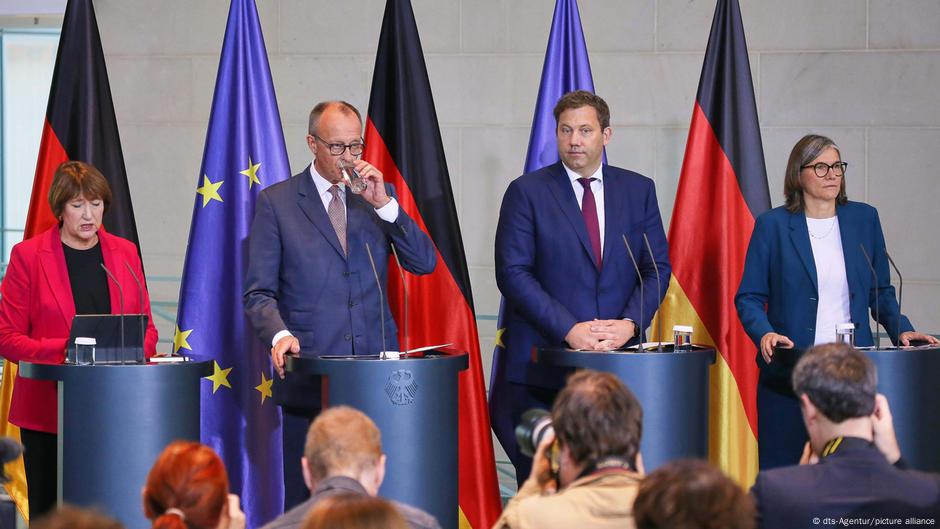
Chancellor Friedrich Merz spoke out against the EU’s current goal of abolishing new cars with combustion engines by 2035 and only allowing new purely electric vehicles to be registered until then. Merz spoke at a summit with other German politicians and leaders of the country’s struggling automotive industry.
Merz’s Stance
“There will not be such a hard cut-off in 2035 if I have anything to do with it, and I will do everything to achieve that,” said Merz in Berlin. Activists from Greenpeace and Fridays for Future waited outside the Chancellery in Berlin on Thursday and protested as top politicians and automotive executives gathered for the talks.
The Social Democratic Coalition Partners
Vice Chancellor Lars Klingbeil, a member of the Social Democrats and thus a leading representative of Merz’s junior coalition partner, had also signaled his willingness to change the plans. In particular, he named cars such as plug-in hybrids, so-called range extenders (fuel-powered generators that power an electric motor and battery with a fraction of the fuel needed to power a conventional engine) and those that use innovative fuel blends.
Plans to Continue Incentives for Electric Cars
Merz and Klingbeil both emphasized plans to continue and intensify the purchase incentives for electric cars. These include maintaining the car tax exemption and a new purchase incentive system that she says is tailored to low-income car buyers, with electric cars still costing above average and the cheapest from China subject to high tariffs in the EU.
Challenges in the Automotive Industry
Germany is scrambling to shore up its renowned auto industry, which is struggling with increasing competition from China, generally declining demand for cars in Europe, new trade barriers in the U.S. and China and a host of other issues, as well as the transition to electric motors. According to a recent study, more than 50,000 jobs will be lost in the automotive industry in Germany in 2024.
The EU’s Examination of the All-Electric Target
The EU has set itself the goal of no longer allowing any new fuel-powered cars from 2035 until 2022. Many industry leaders have expressed doubts about the viability of the proposal. The EU itself was already trying to review the political plan, perhaps with a view to finding a compromise.
Limitations of Electric Cars
Electric cars are still more expensive than vehicles powered by petroleum, but with significant limitations in terms of range and charging times. In addition, longer-term issues such as the actual lifespan of their batteries, the cost of replacement, and the environmental costs of disposal or recycling are still only partially understood. Their market share is growing in Germany with the help of incentive programs, but as of August this year only 19% of new car registrations were BEVs (battery electric vehicles, which will also be registered in 2035).
Reactions from Other German Politicians and Lobby Groups
German Green Party co-leader Katharina Dröge criticized Thursday’s announcement, saying it effectively doomed legislation at the EU level. “Merz and Klingbeil are de facto announcing the end of the EU internal combustion engine in 2035,” said Dröge. However, probably the most successful and long-standing Green Party politician Winfried Kretschmann, Prime Minister of the Baden-Württemberg state of Mercedes and Porsche, welcomed the decision with the words: “The goal of 100 percent electric mobility cannot be achieved by then.”
Support from Other Politicians
The Prime Minister of Lower Saxony, home of Volkswagen, also welcomed the news. “That was a good car summit,” said Social Democrat Olaf Lies, praising a regular German meeting of politicians and entrepreneurs that had a reputation for ending with a whimper rather than a bang. The chairwoman of IG Metall said the car summit “gave us some self-confidence”.
Criticism from Climate Economy Group
A group of companies whose name could be translated as “climate economy” was more critical of the plans. “Instead of vigorously promoting German electric cars, undecided car buyers are unsettled by the debate about green fuels and range extenders and their passion for electric cars is taken away from them,” said the group’s chairwoman, Sabine Nallinger.
