

Introduction to Indian Football
Before India’s courts and associations made headlines, the heart of Indian football lived on the home ground. A player in Mumbai could play 100, 120 games in the entire season, with compulsory games, local venues, and different tournaments – he had the opportunity to play. This system once formed the backbone of Indian football, with district and state leagues feeding into national tournaments, and professional players advancing step by step – from district clubs to state teams and finally to the national team.
A League in Limbo
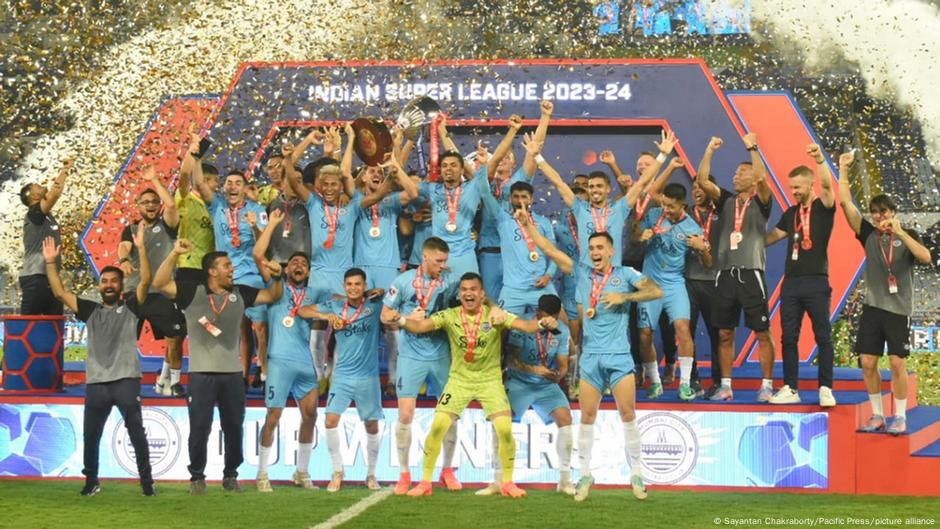
The Indian Super League (ISL) changed all that by breaking away from the domestic system more than a decade ago. Since then, it has moved further and further away from the base of the pyramid that once produced its players. Now, with the ISL on the verge of collapse, Indian football is at a crossroads. This summer, India’s Supreme Court became involved in football’s biggest dispute, directing the All India Football Federation (AIFF) to conduct an open tender for commercial rights to the Indian Super League, ending the decade-long exclusive agreement with its private operator.
The Current State of the ISL
The order came after months of uncertainty in which the 2025-26 season was put on hold, clubs delayed payments, and the league’s leadership was embroiled in negotiations. The association has set the deadline for submitting new applications to hold the competition on October 15. If that fails, India’s top flight could lose an entire season. The ISL, launched as a franchise competition in 2014, brought in global stars and sponsorships but created a parallel system outside of traditional football rankings. Its 15-year commercial deal with Football Sports Development Limited (FSDL) – a Reliance and Star India company – expires next year. Talks about a renewal stalled, and the dispute ended up in court.
Politics, Power, and a Legacy of Control
This governance crisis is just the latest chapter in a difficult sport in India. Many senior AIFF and state officials also hold political positions, blurring the line between administration and influence. In 2022, the football association was suspended by FIFA for "third-party interference". Former India captain Bhaichung Bhutia described the association as “rotten to the core”. Henry Menezes, a former Indian goalkeeper and long-time football official, takes a more moderate tone but does not deny that politics plays a major role.
A Broken Pyramid
Before looking at the future of the ISL, it is worth considering that its greatest legacy could be the severed link between grassroots and professional sports. “A district champion cannot go beyond the district,” Menezes said. “There is no upgrade.” At the same time, children’s participation has exploded. “In grassroots football we are talking about baby leagues where the participation of children aged 9 to 17 has increased manifold,” Menezes continued. This divide creates a paradox: the sport has never been more popular, yet the paths for young players to climb the career ladder are blocked.
What’s Next for the ISL?
Few expect the ISL to disappear. The association and its trading partners have strong incentives to strike a new deal. Menezes believes whoever the new deal is signed with will have to be different from the previous ones. “We need professionals,” said Menezes, adding that the association alone lacks the marketing expertise to make the league viable. The former player also believes the introduction of promotions and relegations would further increase accountability. The AIFF’s tender process will determine whether the league restarts soon or whether reforms completely reshape its model. Menezes believes the goal should be simple: professionalism guided by structure and governance balanced by transparency.
