

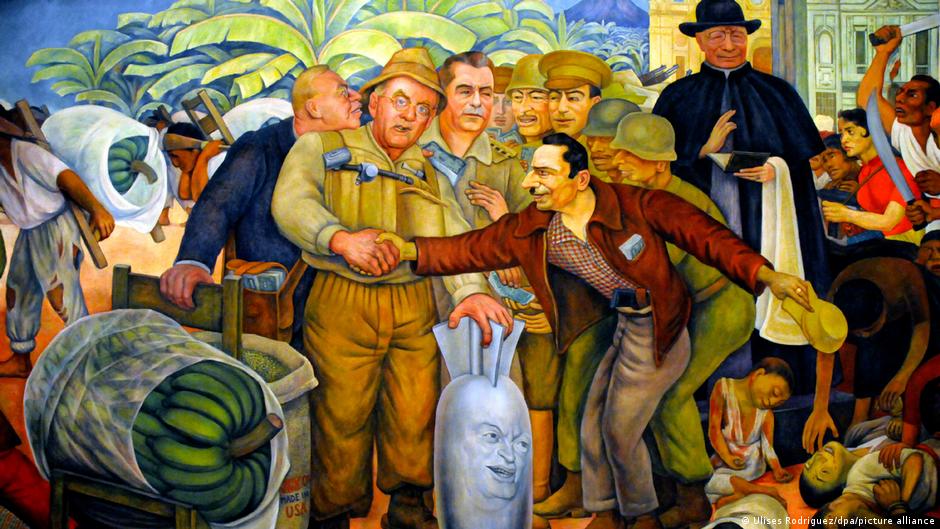
Introduction to Banana Republics
A tin dictator with reflective sunglasses and medals on his chest; a parliament in disarray; a people silenced by impunity. These are images we can imagine when we hear the phrase “banana republic.” The term was coined by the American writer O. Henry, who fled to Honduras in 1896 to avoid embezzlement charges from a Texas bank. In the coastal city of Trujillo, he had observed how the United Fruit Company of the United States dominated the city’s railroads and port facilities and exercised significant political influence.
The Origin of the Term
This inspired his novel “Cabbages and Kings” (1904), in which he wrote about the fictional Republic of Anchuria – a “small, maritime banana republic” whose government bowed to the interests of a powerful foreign corporation. Since then, it has been loosely used by US academics, journalists, politicians and writers as a synonym for a corrupt, failed state. The original "banana republics" were four Central American countries – Honduras, Guatemala, Nicaragua and Costa Rica – in which the US banana companies United Fruit Company and Standard Fruit controlled much of the country and political life.
Not Just a Fruit Company
With Washington’s support, these companies helped install loyal governments and pressure or fire leaders who resisted their terms. Banana republics are probably the states that have ever come closest to a colonizing power, without the claims and responsibilities that colonizers had towards the colonized elsewhere. An infamous example occurred in Guatemala after democratically elected President Jacobo Arbenz attempted to redistribute unused plantation land. The move threatened the holdings of the UFC, which once controlled vast swaths of Guatemala’s farmland.
Colonial Violence Then and Now
In June 1954, Arbenz was deposed in a CIA-sponsored coup to protect the fruit company’s profits, and Arbenz was replaced by a brutal U.S.-backed regime that committed widespread human rights abuses. The banana republic system also took a human toll. Labor disputes on banana plantations often ended in violence. One infamous episode was the 1928 banana massacre in Colombia, in which the army fired on striking United Fruit Company workers for demanding better wages and working conditions; women and children were also among the victims.
The USA: A Banana Republic?
The term “banana republic” also dominated U.S. political commentary following the Capitol insurrection on January 6, 2021. Some argue that this phrase “looks at the results rather than the causes.” The United States is described as “by nature” a banana republic because the model of extractive banana corporations “is as much a foundational source of U.S. history as it is of Honduran history.” The United States’ vast overconsumption is "a result of our colonization of everything from the land to the atmospheric commons.
Derogatory or Descriptive?
The term “banana republic” has undergone a semantic drift typical of living languages. Although it originally referred to the story above, "over time the term became associated with other characteristics of some of these nations – which, it is important to remember, were often exploited by these foreign corporations – including instability, military rule and/or a dictator, and sometimes corruption." Nowadays it is also applied to countries that do not have such a corporate or raw material export history. The term is usually a pejorative term – that’s less ambiguous.
Conclusion
If the term refers to an inherent quality of people, then it is racist and derogatory. If these are historical relationships that have undermined sovereignty, then that is a useful term. The distinction is important, because there is a tendency to treat poverty, violence and corruption as if they were Central American. The term “banana republic” is now also available in other languages, including German, French and Spanish. According to some, it is also used in Latin America in political or academic contexts. Most Latin Americans are less concerned about whether the term is politically correct; it takes the focus away from the ugly realities.
