

European Cinema’s Moment
European cinema is having a moment — and not the kind engineered by marketing departments or toy companies. While much of Hollywood relies on sequels, superheroes, and slasher films, the most important films of the past year came from Europe. Not as escapist fantasy adapted from comics, toys, or video games, but as sophisticated, politically engaged stories aimed squarely at adults. These are films that assume that viewers are willing to put up with ambiguity, moral discomfort, and unresolved questions. They don’t flatter their audience; they challenge you.
Adult Films
This sensitivity is on full display at this year’s European Film Awards, Europe’s most important cinema award. The films competing for top honors — from France, Germany, Spain, Scandinavia, and beyond — share a seriousness that is increasingly rare in mainstream U.S. cinema. They are formally adventurous, often disturbing, and unashamedly political. And for the first time in years, some of them are also central players in the broader awards season, including the Oscars.
Jafar Panahi’s Urgent Political Thriller
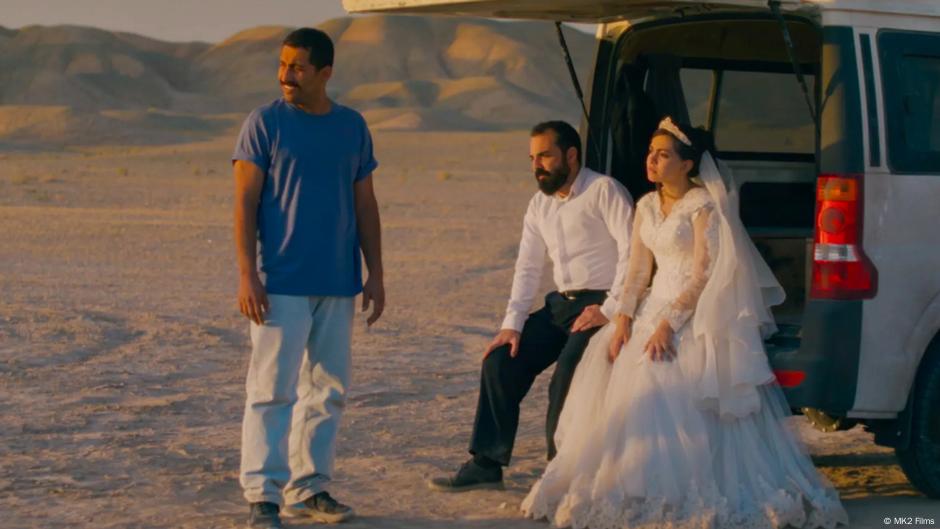
A leading candidate is Jafar Panahi’s Iranian-French drama "It Was Just an Accident," a film that manages to combine dark comedy and political satire with moral savagery and the pace of a Hitchcock thriller. The premise is deceptively simple: Vahid, a former political prisoner, believes he recognizes the man who once tortured him. On an impulse, he kidnaps the man and takes him to the desert to bury him alive. But in prison, Vahid was always blindfolded. He can’t be sure he has the right man.
Cinema at the End of the World
If Panahi’s film is a political thriller disguised as a moral conundrum, Oliver Laxe’s Sirat is something stranger and more elemental. The film begins as a search story: a father searches for his missing daughter, who disappeared in Morocco’s underground rave scene. Then the ground shifts. The military arrives. Some kind of global conflict – perhaps World War III – appears to be underway, although the film never explains exactly what happened.
History through the Lives of Women
“Sound of Falling” works on a broader historical canvas. Set on the same rural German farm, the film follows four generations of women through a century of German history. Its visual rigor is reminiscent of Michael Haneke’s "The White Ribbon," and the cross-generational plot is reminiscent of Edgar Reitz’s "Heimat" films, but by focusing on women’s stories, on the ignored and forgotten characters of history, the film breaks new ground.
From Europe to the Oscars
The fact that these types of films – intelligent, radical, and challenging – are being recognized by the European Film Academy is nothing new. This type of cinema has always been central to the EFA’s identity. What feels different this year is the reach of these films beyond Europe. “It Was Just an Accident,” “Sirat,” and “Sentimental Value” are all serious Oscar contenders — not just in the International Feature category, but also in the race for Best Director and even Best Picture.
