

Introduction to the World Economic Forum
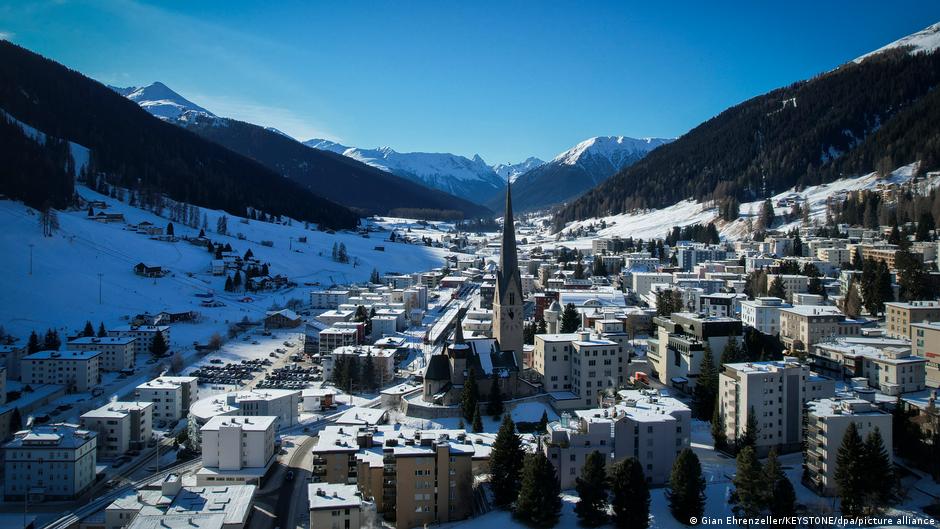
The Swiss Alpine city of Davos is once again welcoming the elite of the political, economic, and cultural world to the annual meeting of the World Economic Forum (WEF). This event comes at a time when US President Donald Trump is attempting to disrupt the international order, from scrapping established trade rules and mass withdrawal from international organizations, including the UN climate agreement.
Expected Key Themes
Trump’s attack on international rules, most of which have been in place since World War II, and his impact on global peace, politics, and the economy are expected to be among the key themes of the five-day event. The theme of this year’s meeting is "A Spirit of Dialogue." According to Borge Brende, President and CEO of the WEF, "Dialogue is not a luxury in times of uncertainty, but an urgent necessity."
Attendees and Delegations
Donald Trump will be accompanied by more than 60 heads of state and government, including German Chancellor Friedrich Merz, Canadian Prime Minister Mark Carney, Argentine President Javier Milei, European Commission President Ursula von der Leyen, China’s Deputy Prime Minister He Lifeng, Pakistani Prime Minister Shehbaz Sharif, and Syrian leader Ahmad al-Sharaa. Trump is leading the largest US delegation ever to Davos, consisting of five Cabinet secretaries and other senior officials.
Largest US Delegation Ever in Davos
The delegation includes Secretary of State Marco Rubio, special envoy Steve Witkoff, and Trump’s son-in-law Jared Kushner. They set the stage for high-profile discussions about Ukraine, Venezuela, Gaza, and Iran. Trump is expected to meet on the sidelines of the main event with Ukrainian President Volodymyr Zelensky and Kiev’s G7 allies to seek U.S. support for security guarantees for Ukraine following a possible peace deal with Russia.
Geoeconomic Warfare
While geopolitical upheavals and resulting uncertainty are expected to dominate discussions, policymakers and business leaders would be interested in discussing ways to address other challenges facing the global economy. The global economy has proven relatively resilient despite heightened trade tensions and political uncertainty, thanks in part to massive investments in artificial intelligence (AI) in the US that have underpinned the world’s largest economy.
Economic Challenges
Projected global growth of 3.1% in 2026 is still not ideal, especially at a time when global debt has risen to levels not seen since World War II. According to the International Monetary Fund (IMF), the debt situation in several African countries is particularly worrying. Global trade remains under pressure as countries take increasingly protectionist measures, such as imposing unilateral tariffs, increasing restrictions on foreign investment, and a tightening supply of critical minerals.
AI Challenges and Opportunities
Artificial intelligence is another focus this year, with several events and talks dedicated to frontier technology. Top technology leaders such as Microsoft’s Satya Nadella, Nvidia’s Jensen Huang, and Google’s AI chief Demis Hassabis will attend the event. AI is already showing promise in areas such as medicine and education and has led or promised trillions of dollars in investments in recent years.
Impact of AI on Jobs
There are concerns about the impact of technology on jobs, with many feared to become redundant in the next few years. AI could eliminate half of all entry-level white-collar jobs in the next one to five years, underscoring the need for massive investment in retraining. AI risks worsening the existing digital divide as poorer countries are unable to take advantage of the opportunities.
New Leadership at WEF
This year’s meeting would be the first without WEF founder Klaus Schwab at the helm. The German-born economist resigned in April 2025 amid allegations that he and his wife used WEF funds for personal use. However, an independent investigation found no criminal wrongdoing, only minor irregularities. Schwab was succeeded by interim co-chairmen Larry Fink, CEO of BlackRock, and Andre Hoffmann, deputy chairman of Swiss pharmaceutical company Roche Holdings.
Future of the WEF
The strong number of participants this year is an incentive for the organization after a turbulent year. The organization that has existed since 1971 to promote dialogue now faces headwinds as multilateralism weakens and free trade comes under attack. The WEF’s annual Global Risks Report highlights the need for effective regulations to address the challenges posed by AI, cybersecurity, and misinformation.
