

Introduction to the Problem of Single-Use Plastics
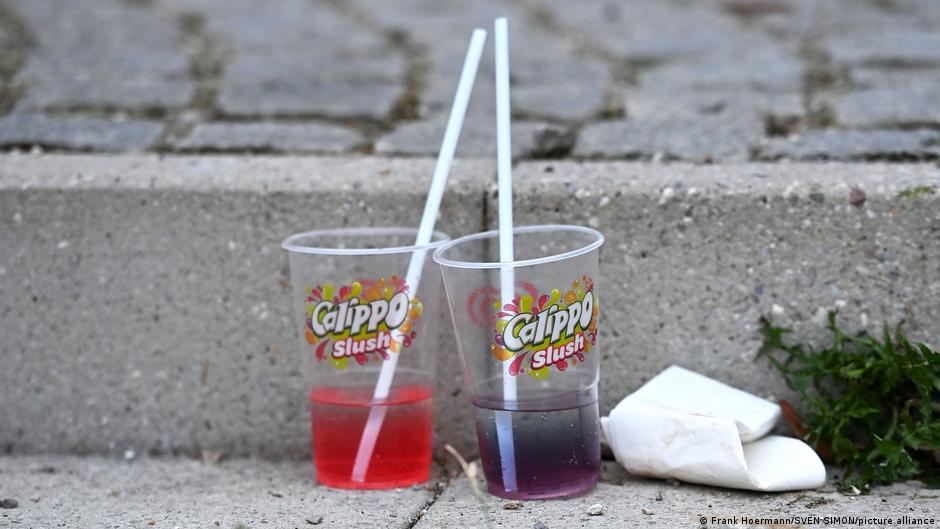
Single-use plastic is a persistent issue that continues to plague the environment, despite efforts to ban it. Plastic straws, cutlery, and Styrofoam boxes are still commonly found at snack bars, cafes, and restaurants across Europe, even after the EU officially banned them in 2021. The EU targeted these items after discovering that 85% of the trash washed up on its shores was plastic, with almost half of it being single-use items.
The EU’s Ban on Single-Use Plastics
The EU’s ban on single-use plastics was intended to address the growing problem of discarded plastic, which can release harmful chemicals and tiny particles that enter the environment and the human body, potentially increasing the risk of serious health problems. The logic behind the ban was simple: by banning the sale, production, and import of the worst offenders, the problem would go away. However, the reality is that around 70% of snack bars surveyed in Berlin still offer banned plastic items, according to tests carried out by the non-governmental organization Environmental Action Germany (DUH) in 2024.
The Persistence of Single-Use Plastics
One theory suggests that the persistence of single-use plastics after the EU ban is due to leftover stocks from the COVID pandemic. However, experts like Britta Schautz from the Berlin Consumer Center argue that this is unlikely, as plastic becomes porous over time and the ability to safely store food and drinks is limited. A more likely reason is a lack of compliance by retailers and food businesses. Many small business owners who have switched to paper or aluminum substitutes are seeing increased expenses, and some are finding ways to circumvent the ban by making slightly thicker disposable cutlery and labeling it "reusable."
Challenges in Enforcing the Ban
The rules are not being consistently enforced, and authorities in Germany’s largest cities are not providing examples of fines for non-compliance. Experts argue that a more consistent imposition of fines and better communication of the ban would provide a better deterrent. Other countries, such as Kenya, have taken tougher measures, with fines of up to $31,000 and prison sentences for violating the plastic ban.
Loopholes in the Law
Online trading is one of the blind spots of the law, with plastic straws and cutlery widely available on major retail platforms. Manufacturers in the EU are also exploiting legal loopholes by making slightly thicker disposable cutlery and labeling it "reusable." This has led to an increase in consumption in some cases, with companies finding ways to circumvent the ban.
A Patchwork of Plastic Laws
At least 90 countries worldwide have implemented some form of plastic ban, but the rules vary widely and target different regions and items. Experts argue that this fragmented system does little to curb waste. In Germany, only plastic bags with a thickness between 15 and 50 micrometers are banned, but 87% of bags distributed in 2022 fell into this category, highlighting the confusion surrounding the law.
The Need for Global Action
Experts argue that the idea that we can solve the problem country by country is no longer a solution. Global bans and limits on plastic production are needed to address the problem. A coalition led by oil-producing countries wants the legislation to remain at the national level and focus on waste management, but a group led by Norway, Rwanda, Canada, and 72 other countries is pushing for broader bans and a production cap. The positions are too far apart for the United Nations to reach consensus, but stricter guidelines are overdue. Even a 10% reduction in plastic consumption over the next decade would be a victory.
