

Introduction to the Crisis in Venezuela
The United States’ attacks on Caracas and the capture of Venezuelan leader Nicolas Maduro have left the South American country in a state of deep confusion and uncertainty. Immediately afterward, U.S. President Donald Trump promised that the U.S. would “rule” Venezuela, a move that appeared to depend on how the U.S. would handle the country’s most important raw material: oil.
The Importance of Oil for Venezuela
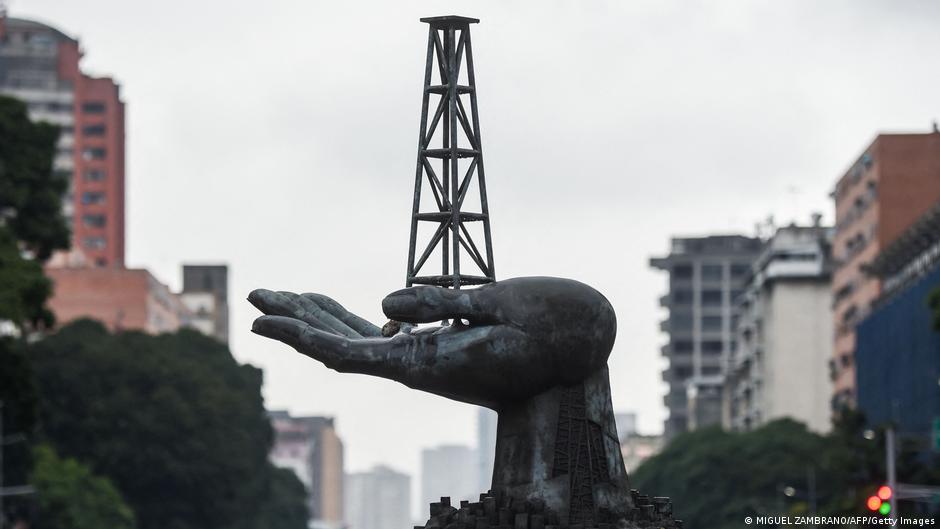
Venezuela’s fragile economy is particularly dependent on oil. Maduro’s government relied almost exclusively on oil for its government revenue. Crude oil and related products such as petrochemicals account for around 90% of Venezuela’s export revenue. They helped keep the heavily sanctioned and isolated government in power despite a severe economic crisis. Venezuela has the world’s largest proven oil reserves at over 300 billion barrels – even more than Saudi Arabia. However, it accounts for less than 1% of global oil production, a figure that was more than 10% of global production in the 1960s. Crude oil production has plummeted by more than 70% since the late 1990s, and Venezuela now ranks 21st among world producers.
The collapse can be traced back to the government of former President Hugo Chávez. His socialist revolution in the 1990s and 2000s led to massive corruption at the state oil company PDVSA and led to foreign investment flowing out of the country due to government intervention in the oil sector. Several accidents in its pipelines and oil refineries created further difficulties, while tightening US sanctions since 2017 further limited Venezuela’s oil production capacity. PDVSA has stabilized oil production at around 1 million barrels per day, thanks in part to U.S. licenses that allow a limited number of foreign partners to operate in Venezuela and export oil.
US Investment in Venezuela’s Oil Sector
Throughout the 20th century, the United States was a key partner in the Venezuelan oil sector, as its major oil companies invested heavily in the country. All but one left the country after the Chávez Revolution – Chevron. Although sanctions hurt its operations, Chevron received special licenses from the Biden administration in 2022 to restart Venezuelan oil exports under strict conditions. The idea was that easing Venezuelan sanctions would ease pressure on the oil market in the wake of Russia’s invasion of Ukraine.
In October this year, the Trump administration granted Chevron a new permit to explore oil in Venezuela, arguing that the US company was an important partner for Caracas. It is the most obvious and immediate beneficiary of all Trump’s moves to allow further US investment in the country. Around 3,000 people are already employed there. Trump says major U.S. oil companies will return to Venezuela as part of his plan. This could include companies like ExxonMobil and ConocoPhillips.
The Need for Venezuelan Oil in the US
The US is already by far the largest oil producer in the world, so at first glance it doesn’t seem clear why Trump is so interested in Venezuela’s oil. The problem, however, is the type of oil the US produces. Its primary product is light crude oil, not the heavier, muddier crude that many of its refineries, particularly on the Gulf Coast, are equipped to refine. Refineries turn crude oil into gasoline, diesel and other products essential to the economy.
Although the U.S. is a major crude oil producer, it still imports heavy crude oil from countries like Canada and Mexico to supply refineries optimized for these grades. This means that much of the crude oil produced in the United States is actually exported. Using the right grades of crude oil keeps our refineries operating efficiently, keeping costs low and ensuring energy security. Although Venezuela’s production has fallen sharply, the vast reserves on which the country rests include the largest global reserves of heavy crude oil that U.S. refineries require.
Challenges in Achieving Trump’s Oil Promise
There are big legal and logistical questions about whether or not oil will flow from Venezuela again. It is unclear exactly which government will emerge in Venezuela without Maduro. It is also unknown to what extent the new administration will facilitate US attempts to influence the country’s oil sector. Then there is the question of the state of Venezuela’s oil infrastructure. The limitation was never the geology. It was governance, sanctions, capital access and execution.
If policy change brings rapid stabilization and credible authority over PDVSA, the benefit is that supply increases over time rather than in a sudden surge. Although some foreign oil companies have remained in Venezuela, sanctions have meant that the country’s oil facilities have not received the necessary investment to remain current. The extent of new investment required may become clearer in the coming months. Another important question is the global appetite for more oil. Prices fell last year and are expected to fall further in 2026 due to a glut in production.
The Role of China in Venezuela’s Oil Sector
China has been an important political and economic partner for Venezuela over the past two decades. In the oil sector, China’s CNPC has a joint venture with PDVSA. Most of the oil produced in Venezuela is shipped to China. However, China has not greatly expanded its oil activities in Venezuela despite the absence of the United States. Beijing has sharply criticized the US overthrow of Maduro as a violation of Venezuela’s sovereignty.
