
Close Menu
  • Home
  • Entertainment
  • Film & TV
  • Fashion
  • Business
  • Sports
  • Lifestyle
  • Tech
  • Health
What's Hot

Amazon ends Flock partnership after backlash over Super Bowl ad

February 14, 2026

‘Quite expensive’ supermarket named country’s favorite supermarket for fifth time | Money news

February 13, 2026

Toyota is recalling 141,000 Prius vehicles due to the risk of the doors opening while driving

February 11, 2026
Facebook Instagram YouTube TikTok
  • About Us
  • Contact Us
  • Terms & Conditions
  • Privacy Policy
Facebook Instagram YouTube TikTok
Nana Media
  • Home
  • Entertainment
  • Film & TV
  • Fashion
  • Business
  • Sports
  • Lifestyle
  • Tech
  • Health
العربية
Nana Media
العربية
You are at:Home»Lifestyle»Discover the secret behind the colorful aurora skies
Lifestyle

Discover the secret behind the colorful aurora skies

Nana MediaBy Nana MediaDecember 29, 20254 Mins Read
Facebook Twitter Pinterest LinkedIn Tumblr Email
Discover the secret behind the colorful aurora skies
Share
Facebook Twitter LinkedIn Pinterest Email Copy Link

Introduction to the Northern and Southern Lights

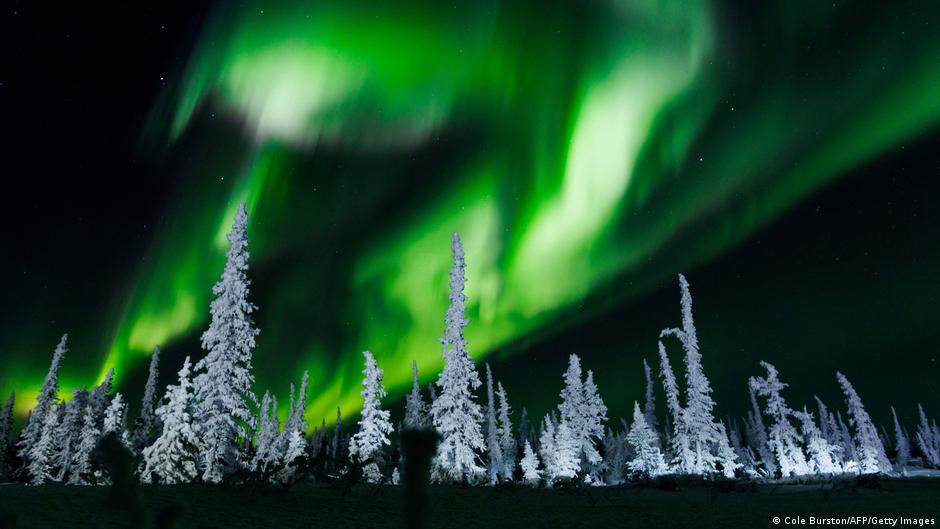
In recent years, there has been increasing interest in the almost psychedelic vision of bright green and purple lights dancing across the sky. The desire to get a glimpse of what is officially known as the Aurora Borealis and Aurora Australis has led to special tours, viewing parties, and numerous tracking apps. The appeal of this ephemeral display is clear, but there are several things you might not know about the Northern and Southern Lights.

What Causes the Different Colors?

Huge explosions on the surface of the sun, known as solar storms, regularly throw out huge streams of electrically charged particles. Some of this plasma eventually migrates to Earth and is drawn to the planet’s magnetic poles. These particles then collide with atoms and molecules in Earth’s atmosphere, essentially heating them. The different colors of light depend on the elements in the atmosphere. Oxygen, which makes up about 21% of the atmosphere, gives off a green color when heated, while nitrogen turns the color light purple, blue, or pink. Interactions with oxygen at very high altitudes can even give the lights an intense scarlet color, but this is relatively rare.

Where Are the Lights Visible?

The light show is usually only visible near the Arctic Circle – or, in the case of the Aurora Australis, around Antarctica. However, during the 11-year cycle of powerful sunspots and flares, known as solar maximum, the lights can be seen much farther from the poles. Current exhibitions have been seen in Hungary, Switzerland, and the US state of Florida, as well as in southern Australia and New Zealand. Almost all cycles have these last gasps during the decay phase, and we should see something in the next year and a half to two years.

Are the Northern Lights Dangerous?

Researchers have studied the solar energy particles contained in the northern lights and their potential to damage the ozone layer. Noora Partamies, an atmospheric physicist, told that there is sometimes a "major ozone depletion" in the polar regions due to the aurora borealis. The ozone layer is an important shield that protects us from the sun’s harsh radiation. The level of fatigue can vary greatly, and some solar protons are very energetic and can cause 50 to 70 percent stratospheric ozone depletion in the upper stratosphere of the polar region, damage that can last for weeks before healing naturally.

Do Northern Lights Only Exist on Earth?

Although they are harder to see, auroras have been observed on most planets in our solar system. Their size and intensity are related to the planet’s atmosphere and the strength of its magnetic field. The light show is more spread out on Mars, which has a more localized field instead of an Earth-like global magnetic field, especially in the southern hemisphere. A diffuse green glow seems entirely possible in the Martian sky, at least when the sun throws off high-energy particles.

Why Shouldn’t You Whistle at the Northern Lights?

Possible sightings of the Aurora Borealis were reported as early as 3,000 years ago in a Chinese text from the 10th century BC. Over the centuries, these natural phenomena have inspired awe-inspiring societies around the world. The name itself is associated with Aurora, the Roman goddess of the dawn, and Boreas, the Greek god responsible for the north wind. Ancient Norse myths associated the Northern Lights with the reflections of the armor and spears of the Valkyries, the female warriors who led fallen soldiers to Valhalla. In Native American and Inuit myths, the lights were associated with creator gods, evil giants, or the spirits of stillborn babies and dead ancestors. For many cultures, the lights were feared and respected – something as simple as whistling, for example, could summon the wrath of spirits to descend and kidnap the thoughtless perpetrator.

Ancient Greece Antarctica Arctic Circle Atmosphere Atmosphere of Earth Atmospheric physics Atom Aurora Aurora (mythology) Boreas (god) Charged particle Chemical element Collision Creator deity Dawn Diffuse reflection Earth Electric charge Energy Evil Extraterrestrial sky Ghost Giant Greek mythology Heat Hungary Indigenous peoples of the Americas Inuit religion Luminous intensity Magnet Magnetosphere Mars Molecule Myth New Zealand Nitrogen Norse mythology Oxygen Ozone depletion Ozone layer Particle Particle physics Planet Plasma (physics) Polar regions of Earth Proton Radiation Roman mythology Solar cycle Solar energy Solar flare Solar maximum Solar System Southern Hemisphere Spear Stillbirth Stratosphere Sun Sunspot Switzerland Valhalla Valkyrie Visible spectrum Volume Warrior
Share. Facebook Twitter Pinterest LinkedIn Tumblr Email
Avatar photo
Nana Media
  • Website

Related Posts

Toyota is recalling 141,000 Prius vehicles due to the risk of the doors opening while driving

February 11, 2026

“Chinamaxxing” is TikTok’s latest pointless trend

February 5, 2026

Pieces of the Berlin Wall as souvenirs: fake or real?

February 4, 2026
Top Posts

Amazon ends Flock partnership after backlash over Super Bowl ad

February 14, 2026

Gavin Newsom is played by Travis Quentin Young in the film ’33 Days’.

June 10, 2025

Yes, that’s really that Bob Dylan MGKS “Lost Americana” albon trailer tells

June 11, 2025

How to find the perfect fascinator for the race day

June 10, 2025
Don't Miss
Business

Private hospital giant Spire sets deadline for applicants | Money news

By Nana MediaJanuary 1, 2026

Britain’s Largest Private Hospital Operator Sets Deadline for Takeover Britain’s largest private hospital operator has…

“The Conjuring: Last Rites” achieves $ 187 million global cash chinned; ‘Hamilton’, ‘Madharaasi’ debut in Top Ten

September 8, 2025

Could XI and Putin be on something?

September 7, 2025

Vue appoint CFO before the expected public offer of 2026

September 13, 2025
About Us
About Us

Welcome to Nana Media – your digital hub for stories that move, inform, and inspire. We’re a modern media platform built for today’s audience, covering everything from the glitz of entertainment and the magic of film & TV to the latest innovations shaping our tech-driven world. At Nana Media, we bring you sharp insights, honest opinions, and fresh takes on the trends shaping pop culture and beyond.

Facebook Instagram YouTube TikTok
Our Picks

Amazon ends Flock partnership after backlash over Super Bowl ad

February 14, 2026

‘Quite expensive’ supermarket named country’s favorite supermarket for fifth time | Money news

February 13, 2026

Toyota is recalling 141,000 Prius vehicles due to the risk of the doors opening while driving

February 11, 2026
Our Newsletter

Subscribe Us To Receive Our Latest News Directly In Your Inbox!!!

We don’t spam! Read our privacy policy for more info.

Check your inbox or spam folder to confirm your subscription.

© Copyright 2026 . All Right Reserved By Nanamedia.
  • About Us
  • Contact Us
  • Terms & Conditions
  • Privacy Policy

Type above and press Enter to search. Press Esc to cancel.