

Introduction to Refurbished Appliances
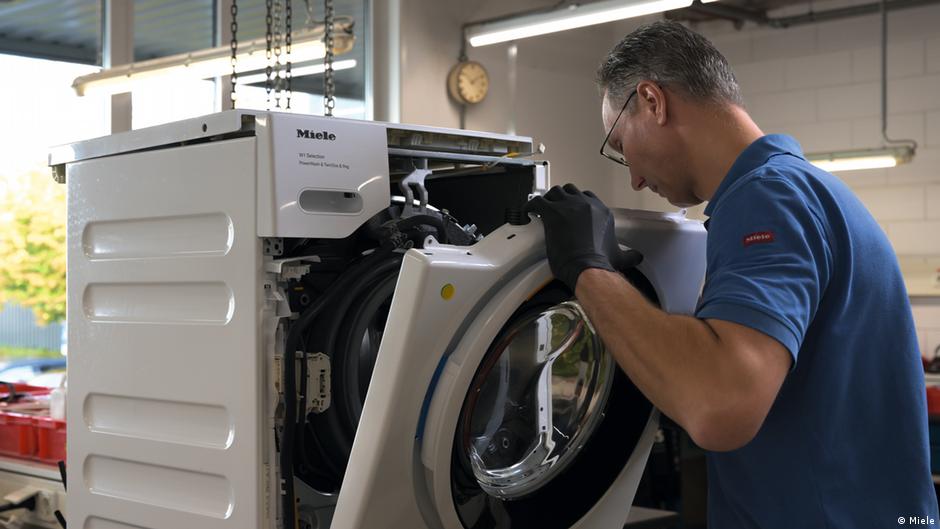
Three years ago, high-end German home appliance manufacturer Miele began selling refurbished washing machines in the Netherlands alongside its regular products. The aim is to collect returned Miele washing machines, including those with scratches or easily repairable defects, repair them and resell them online. The German company chose the Netherlands because Miele products are very popular there and consumers there are comparatively open to refurbished products.
Expanding Customer Base
The company hopes to reach new customer groups with the project. Max Wagner, who leads Miele’s sustainability team, says sales of refurbished appliances have not cannibalized his company’s sales of new models, as initially feared. “We were able to expand our customer base to include younger, digitally savvy groups who might otherwise have chosen a competitor for cost reasons,” Wagner said. Surveys have shown that sustainability aspects such as resource conservation and environmental protection are of secondary importance for customers when purchasing refurbished products.
Refurbished Circuit Boards
Another Miele pilot project focuses on the refurbishment of circuit boards. When repairing their washing machine, dishwasher or coffee machine, customers have the choice between installing a new circuit board or installing a refurbished circuit board. When repairing older devices, customers often opt for the cheaper, refurbished option. Miele will have remanufactured around 12,000 electronic components in 2024; the pilot project is running in five European countries, including Germany.
Challenges in Reselling Large Home Appliances
Reselling large home appliances can be complicated. Smartphones are well suited to the used market. They are small, easy to mail, are typically replaced every two to five years, and have a relatively high residual value. Restarting home appliances is far more complicated, not least because it requires two technicians to assemble a washing machine and a water connection to test its various functions. “Professional renovations with a product guarantee require their own logistics chain,” says Nejc Jakopin of AD Little, a technology consulting firm.
Growth Market for Refurbished Appliances
MediaMarktSaturn, Europe’s largest electrical retailer, offers around 260 “as new” household appliances such as extractor hoods, mini-refrigerators and hobs. In addition, there are thousands of used smartphones and laptops on offer. The Thermomix, a versatile kitchen appliance from the German manufacturer Vorwerk, is one of the most sought-after used products. Even items that are several years old still achieve triple-digit prices on second-hand platforms. There are now companies that specialize in the processing of old devices, including I-Project, the company behind renewed.store, which buys, tests, cleans and resells Vorwerk kitchen products.
Future of Refurbished Appliances
While consumers who want new products without any signs of wear are still in the majority, the refurbished segment is growing, Jakopin said. Miele’s Dutch refurbished washing machine project is intended to serve as a blueprint for other appliance groups and markets. Operating such a system requires a national infrastructure and sufficient revenue to meet demand. Transporting old washing machines across European borders is almost impossible due to EU waste legislation. This is one reason why professionally reconditioned goods currently only have a very small market share. Nejc Jakopin estimates that such goods account for less than 5% of the total market. In comparison, a quarter of European smartphones are purchased used.
