

Britain’s Economy Growth
Third Quarter Growth
Britain’s economy grew just 0.1% in the third quarter of this year, weaker than the 0.2% GDP growth in the previous three months. The value of 0.2% for April to June was again revised downwards from its previous estimate for the period of 0.3 percent.
Impact of Cyber Attack on Jaguar Land Rover
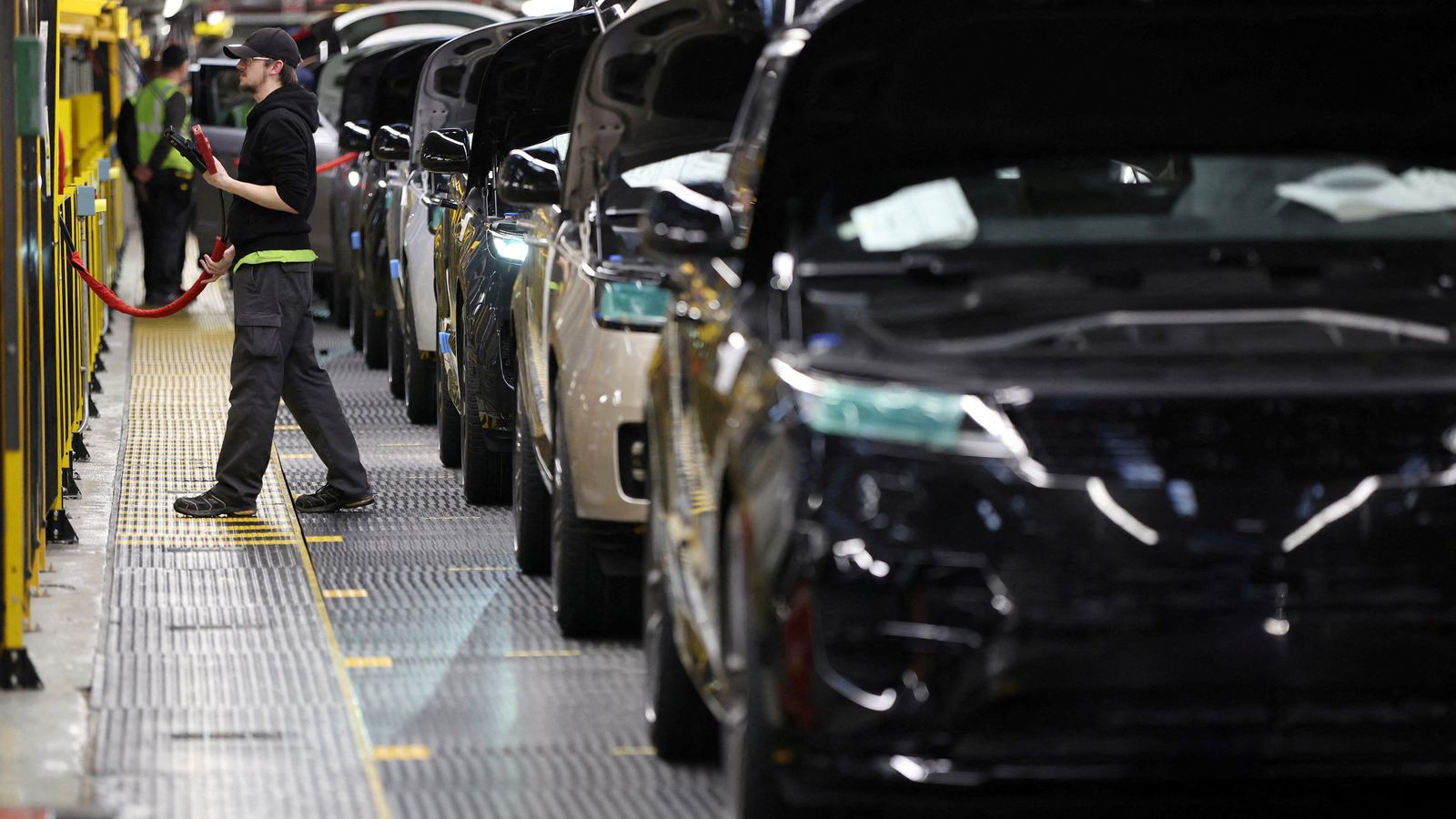
The cyber attack on Jaguar Land Rover that paralyzed production for weeks appears to have played a role in the July-September slowdown. Growth in the services sector was partially offset by declines in manufacturing, with a significant decline in automobile manufacturing.
Savings Rate and Household Disposable Income
Another indicator of the pressure on people’s finances is that Brits saved less between July and September. The savings rate of private households fell by 0.7 percentage points to 9.5% – the lowest level in a year. There was also a 0.8% decline in household disposable income per capita, following no change in the previous quarter.
Interest Rates and GDP Growth
The Bank of England cut interest rates to stimulate the economy. For the current October-December period, GDP growth is expected to be zero, but the underlying pace of economic growth is around 0.2% per quarter. GDP is an important indicator of the economy because it measures the total value of all goods produced and services provided. Increasing GDP means the economy is growing.
GDP Comparison and Revisions
In the first half of this year, Great Britain recorded the best growth figures among the seven major industrialized countries alongside Japan. However, growth has slowed significantly since then. The ONS revised its estimate for the fourth quarter of 2024 by 0.1 percentage point to 0.3%. Revisions are often made as more detailed information and data become available. According to the ONS, GDP in the third quarter was estimated to be 1.3% higher than the same period last year. Meanwhile, full-year 2024 GDP rose 1.1%.
