

Introduction to Christmas Celebrations
For Catholics, Advent began on November 30th this year, marking the start of the anticipation of Christmas. At the Vatican, celebrations commence with the official lighting of the Christmas tree and the inauguration of the nativity scene in St. Peter’s Square.
The Vatican’s Christmas Tree
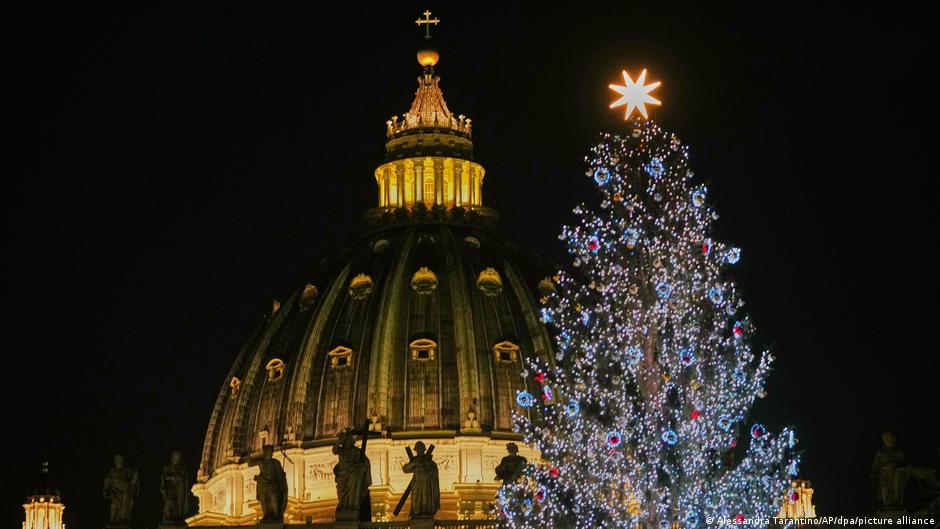
Each year, a different Roman Catholic diocese has the honor of donating a Christmas tree to the Vatican. This year’s tree is a Norway spruce from the diocese of Bolzano-Brixen in the Italian province of South Tyrol, standing 27 meters high and weighing almost eight tons.
The Significance of the Christmas Tree
In an interview, Bishop Ivo Muser of the Diocese of Bolzano-Brixen expressed his hope that the Christmas tree would awaken wonder at creation and stimulate reflection. He also urged people to adopt a sustainable and modest lifestyle. The Christmas tree has been donated from Italy for the fifth time in a row, with a total of four trees previously donated from Germany.
Nativity Scenes from Around the World
The nativity scene was designed and manufactured by the Diocese of Nocera Inferiore-Sarno in southern Italy, featuring life-size figures and architectural elements typical of the Nocera region. An exhibition, "100 Nativity Scenes in the Vatican," is also on display, showcasing nativity scenes designed by artists from 23 countries.
Christmas Eve and Beyond
On Christmas Eve, special events take place, followed by the papal blessing "Urbi et Orbi" on Christmas Day, where the Pope delivers his message and blessing from the balcony of St. Peter’s Basilica. Tickets are not required for this event, which begins at 12 p.m.
New Year’s Eve and the End of Celebrations
On New Year’s Eve, the Pope holds New Year’s Eve vespers and sings the hymn "Te Deum" in gratitude for the past year. The festivities conclude with a Mass celebrating the Solemnity of the Epiphany on January 6, marking the end of the Jubilee Year.
