

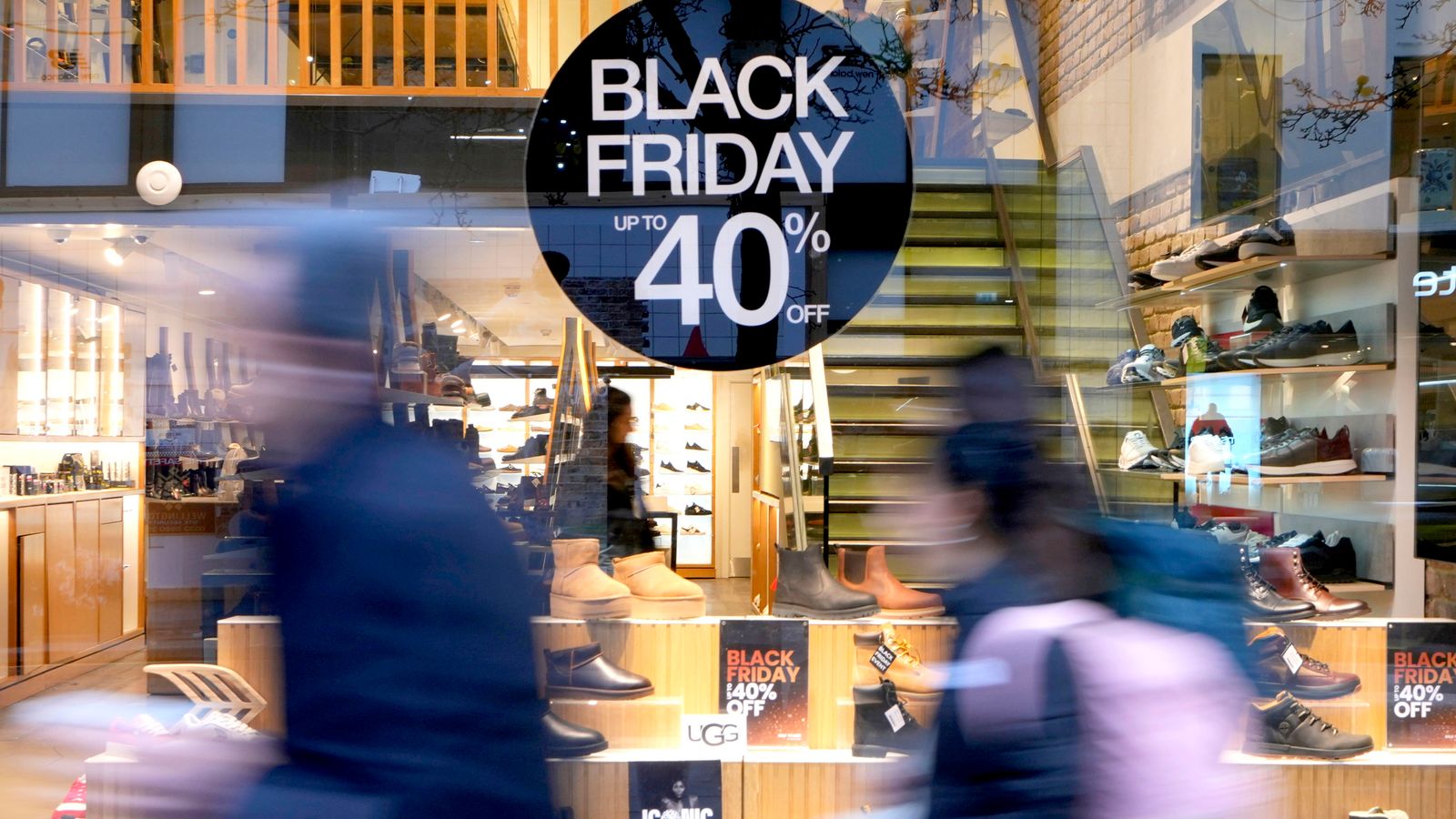
Black Friday Sales Disappoint Retailers
According to official figures, Black Friday sales do not appear to have brought much joy to retailers amid continued consumer caution. The Office for National Statistics (ONS) reported a 0.1% fall in sales volumes in November compared to the previous month, with the data adjusted for seasonal effects due to the decline in the pre-Christmas shopping boom in December last year.
Economic Expectations
Economists surveyed by Reuters had expected growth of 0.4%. The decline was worse when excluding the impact of fuel sales. Three-month rolling data showed positive sales volumes were only supported by strength in September. Hannah Finselbach, a senior statistician at ONS, said: “Retail continued to grow in the three months to November, supported by a strong performance from clothing and technology stores.”
Consumer Confidence
The data was published in advance against the background of general caution among consumers and companies on November 26th – just two days before Black Friday. This period was marked by shifting signals about income tax increases and black holes in public finances, but the budget itself largely backdated many of the most painful measures towards the end of the parliamentary term. While the ONS data does little to boost retailers’ expectations for the Christmas period, some comfort could be gleaned from a closely watched survey published just before.
GfK Consumer Confidence Index
The GfK consumer confidence index rose to its highest overall value this year – but remained deep in negative territory. The largest upward contribution came from willingness to make major purchases, although personal finance assessments were weighed down by ongoing cost-of-living pressures in the economy. Neil Bellamy, director of consumer insights at GfK, said: "Consumers are like a family on a festive winter walk crossing a boggy field – trudging along stoically, getting stuck in the mud and hoping that conditions will improve again not too far away.”
Economic Outlook
Since the survey was completed, better economic news has been received. A decrease in the inflation rate from 3.6% to 3.2% and the Bank of England’s decision to reduce interest rates to 3.75% promise to boost purchasing power as borrowing costs continue to fall and wage growth still outpaces the pace of price growth. It is now hoped that the end of the fiscal circus will bring some momentum to the economy after two consecutive monthly falls in output and a rise in the unemployment rate.
Impact on the Economy
Much of the increase is due to the retail and hospitality sectors responding to the sharp rise in employment costs. Consumer spending accounts for around 60% of the UK economy. Commenting on the outlook, Richard Carter, head of fixed interest research at Quilter Cheviot, said: "Markets do not believe there will be growth in the UK any time soon.” “In fact, the UK is likely to slip into recession based on the latest GDP figures and there is little sign of any positive momentum emerging.”
