

Introduction to Europe’s New Economic Strategy
Europe is facing numerous challenges, including customs disputes, the war in Ukraine, and environmental problems, prompting a reevaluation of its economic strategy. A key consideration is the role of environmentally friendly production, agriculture, and natural resource protection in the future. The EU’s Green Deal, launched in 2019, aims to make industries more efficient and climate-neutral by 2050. However, the plan is facing criticism and pressure, particularly from the conservative EPP group in the European Parliament.
Relaxation of Reporting Requirements for Companies
Two central instruments of the Green Deal are the EU supply chain law and the obligation for companies to report on their social and environmental impacts. Initially, around 50,000 EU companies with at least 250 employees were required to produce these reports annually. However, due to complaints from companies about the regulatory burden, small and medium-sized companies are no longer required to report. The regulation now only applies to large corporations with a turnover of three-digit million euros. Critics argue that fewer reporting requirements mean less transparency for the public and investors who want to support sustainable practices.
Less Monitoring of Supply Chains
The adoption of the simplification package has led to a weakening of regulations in the Supply Chain Act. The rules now only apply to multinational companies with more than 5,000 employees and a turnover of at least 1.5 billion euros. Victims of environmental and human rights violations along the supply chain no longer have the right to sue, and companies are not required to submit their own climate strategies. The goal of identifying, containing, and ending human rights and environmental violations along the supply chain has been significantly watered down.
Products Linked to Deforestation
The EU had agreed on rules to protect forests, requiring products such as tea, coffee, soy, and beef to be sold only if there is evidence that they are not linked to deforestation. However, the introduction of these rules has been postponed until the end of 2026, and significantly fewer companies are required to prove that their products are manufactured in a deforestation-free manner. The Food and Agriculture Organization of the United Nations estimates that around 420 million hectares of forest were cut down between 1990 and 2020, with EU consumption accounting for around 10% of global deforestation.
Relaxation of Environmental Regulations for Agriculture
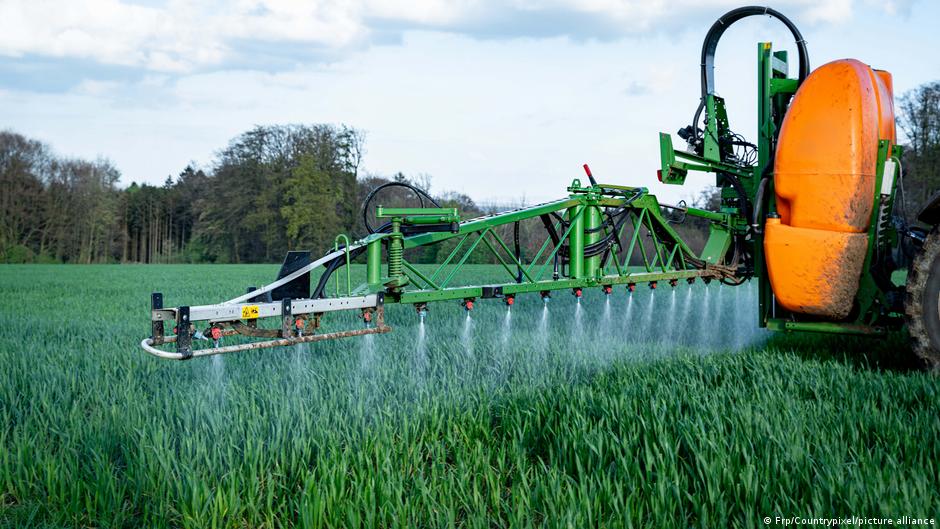
Around a third of the EU budget goes to agriculture, with the majority being subsidies. The bloc’s rules for more sustainable food production have long been a thorn in the side of large farms. Politics is increasingly giving in to these pressures, with farmers’ protests against stricter rules around pesticide use leading to their non-implementation. The Nature Conservation Act, which provided for greater protection of ecologically important peatlands, was massively watered down. Proposals aimed at simplifying bureaucracy for farmers and deregulating the agricultural sector focus on weakening environmental regulations.
Deadline for New Cars with Combustion Engines Postponed
The EU decision to end the production of cars with internal combustion engines within the Union from 2035 could be revised before it comes into force. The federal government has been vocal in its opposition to the deadline, and the country’s automotive industry has consistently opposed the decision. The EU has officially decided to "review" the end of the internal combustion engine, leaving a question mark over when a ban will come into force.
Fewer Climate Commitments at Home
The European climate targets will also be reduced. To avoid extreme climate catastrophes, the EU’s Scientific Advisory Board recommended reducing emissions by 90 to 95 percent by 2040 compared to 1990. However, the EU agreed on a 90% reduction in CO2 emissions, with parts of these reductions able to be offset by EU-funded measures in other countries. This means the EU only needs to reduce its own emissions by 85%, as it can buy up to 5% through reforestation projects abroad. The start of CO2 pricing in the buildings and transport sector has been postponed from 2027 to 2028.
