
Introduction to Poland’s Economic Boom
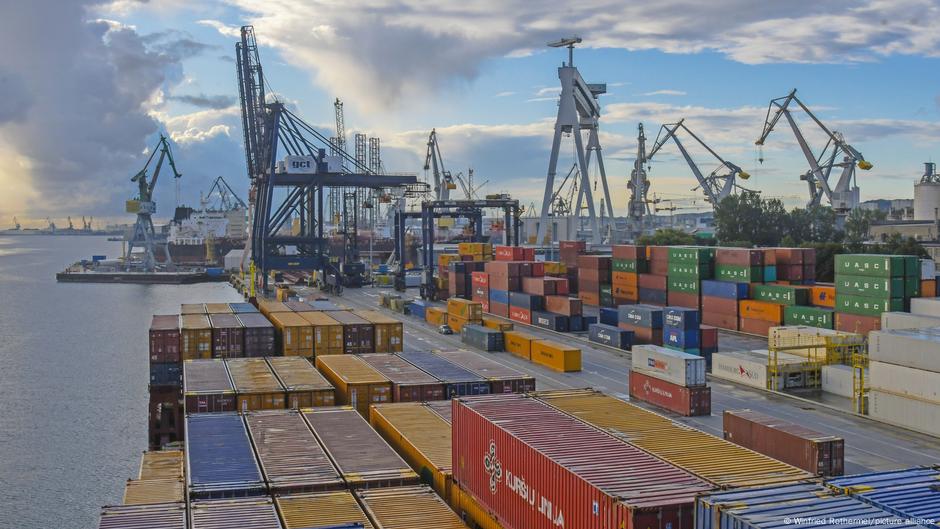
It was an incredible boost for the Polish economy. Over the last two decades, the country has developed from a post-communist transitional state into one of the fastest growing markets in Europe. Driven by domestic demand, European Union (EU) investment funds and a thriving manufacturing and services sector, Poland’s nominal gross domestic product (GDP) surpassed the symbolic threshold of $1 trillion (860 billion euros) in September, according to the International Monetary Fund, cementing the country’s place among the world’s 20 largest economies.
Poland’s Rise to the G20 Table
Seemingly out of nowhere, an opportunity for the country to get involved in global affairs arose last month when the G20, the elite group of wealthy nations, itself fell into turmoil. After accusing South Africa of persecuting its white minority, US President Donald Trump boycotted the G20 summit in Johannesburg and later withdrew South Africa’s invitation to Miami in December next year – the first time in history that a G20 host dropped out. This move opened the door for Poland to temporarily take South Africa’s place at the G20 table as an observer at the December 2026 summit in Miami, Florida.
From the Warsaw Pact to the G20 Table in 36 Years
Last week, US Secretary of State Marco Rubio confirmed Washington’s support for Poland "taking its rightful place in the G20" as a symbol of post-Cold War resilience. This is the first time since the G20 was founded in 1999 that a Central or Eastern European country has been invited to a summit of heads of state and government – even as a guest. The G20 brings together 19 of the world’s largest economies as well as the EU and the African Union, but the role of Eastern and Central Europe is limited to the EU’s shared headquarters.
The G20’s Struggle to Prove Its Purpose
The dispute with South Africa is just one of several challenges currently testing the G20’s relevance. Unlike the United Nations or the EU, the G20 is not a formal international organization and its power is limited to the influence its members collectively wish to exert. The G20 includes nations with conflicting interests, including Russia, China, India and Saudi Arabia. This makes agreement on security, climate or trade issues increasingly difficult.
Another Voice Advocating for Open Markets
Poland will be a convincing voice on behalf of Europe, supporting free trade and an integrated global economy given the current trend toward protectionism. Poland’s observer role comes as the G20 struggles to find common ground on some of the world’s most pressing issues. Chief among these is Russia’s war in Ukraine, where disagreements among G20 member states have prevented a unified response despite the nearly four-year conflict.
Poland’s Economic Development as a Model
Beyond geopolitics, Poland’s economic development offers a model for how low-income economies can pursue similar growth trajectories. Part of the G20’s mission is to support underdeveloped economies by promoting financial inclusion, debt relief, climate change adaptation and knowledge transfer. Poland’s transformation shows how external financing, competitive industries and strong democratic institutions are boosting investor confidence, while rising domestic demand drives sustainable development.
A Permanent G20 Seat for Poland Could Prove Elusive
Rubio spoke last week about Poland’s potential for full G20 membership, while Polish officials are already calling the invitation to Miami the opening chapter of a formal accession process to a full-fledged seat. Still, analysts note that the group’s composition is shaped by both politics and economics. G20 members Argentina, South Africa and Saudi Arabia are no longer among the world’s 20 largest economies but retain their seats due to historical precedent. Competition is another factor, with other emerging economies, from Nigeria to Vietnam, also committed to inclusion. Expanding the G20 beyond its current 21 members risks further weakening its effectiveness.
