

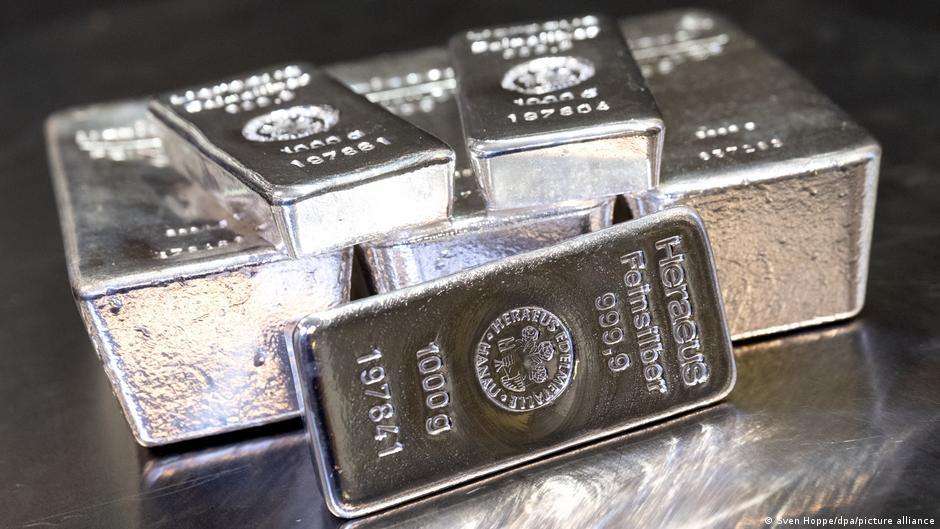
Introduction to Silver’s Recent Price Surge
Silver has enjoyed a remarkable bull market, more than quadrupling in value from around $30 an ounce at the start of the year to an all-time high of $120.44 an ounce on Thursday, January 29. At the start of last year, the metal was trading near $30 on the COMEX and hovered between $37 and $40 throughout the summer before breaking out sharply higher.
Silver’s Dramatic Turnaround
Silver’s 2025 gains represent a dramatic turnaround for the precious metal, long considered gold’s poorer cousin, typically priced higher than silver in bull markets. Although some investors are warning of a possible short-term price correction, sentiment towards silver remains optimistic for the year. Prior to 2025, silver prices have hovered in the $15 to $25 range for much of the past decade, with occasional spikes above $30 during periods of investor enthusiasm. However, it found it difficult to maintain the upward momentum.
Historical Context of Silver Prices
Even at previous peak prices in 1980 and 2011, the price of silver was just under $49 an ounce, well below gold prices above $1,900. This year’s breakout was fueled in part by a falling U.S. dollar and expectations of interest rate cuts from the Federal Reserve, making precious metals more attractive as safe-haven investments. But far bigger factors are driving the rally, including tighter global supply as production struggles to keep up with demand.
Challenges in Silver Production
Latin America, which produces more than half of the world’s silver, is facing a decline in production as mines age and reserves dwindle. Mexico, which accounts for 25% of global supply, has seen a double-digit decline in production in recent years. One of the country’s largest mines, San Julian in the northern state of Chihuahua, is nearing the end of its life by 2027. The mine is one of operator Fresnillo’s largest operations. Ore grades are falling and reserves are being depleted.
Global Silver Supply Deficit
Meanwhile, Peru, Bolivia, and Chile, which together supply nearly a third of the world’s silver, are grappling with declining ore grades that make extraction more expensive and less efficient. These countries also face political instability and stricter mining regulations that have prevented new investments in their mining sectors. Without new discoveries or supportive regulations, production in Latin America is expected to stagnate or decline through the end of the decade, according to analysts at London-based GlobalData. The silver market is now in a structural deficit for the fifth year in a row.
Growing Demand for Silver
Demand for silver is increasing not only because investors view it as a store of value, but also because it has become essential to modern technology and clean energy. Its unique properties, particularly unsurpassed electrical and thermal conductivity, make silver indispensable in rapidly growing global industries. Solar panels, for example, rely on silver paste to conduct electricity. As governments advance renewable energy targets, demand from the photovoltaic sector is expected to rise sharply.
Silver in Emerging Technologies
Electric vehicles (EVs) also require up to two-thirds more silver than internal combustion engine cars. The metal is used in batteries, cables, and charging infrastructure, contributing to the future of green transport. Silver now plays an increasingly important role in the digital economy. Artificial intelligence (AI) and data center chips rely on silver for efficient circuits where speed and reliability are paramount. The precious metal’s ability to handle large electrical loads ensures clean signals and stable performance at scale, while its high thermal conductivity helps dissipate the extreme heat generated by AI workloads.
Historical Role of Silver as Money
Silver has been used as money and a store of value for thousands of years. Ancient civilizations used it in trade because it was rare, long-lasting, and easy to share. Silver’s importance increased when European colonizers discovered vast deposits in Latin America, which helped silver become a metal of everyday trade. Spanish pieces of eight—silver coins worth eight reales, Spain’s old currency before the peseta and the euro—became the world’s first global trading currency, circulating from the Americas to Asia and Europe.
Silver’s Legacy as a Hedge
In the 19th century, many nations, including the United States and the United Kingdom, pegged their currencies to both gold and silver. The British pound sterling got its name from a pound of silver. Silver lost its role as money in the 20th century when countries abolished silver standards. Gold remained in central bank reserves, but silver was pushed into industrial use. It retained its reputation as a hedge against inflation and financial instability, a legacy of its long history as everyday money.
