

Introduction to Haute Couture
Jonathan Anderson’s arrival at Dior was one of the most talked-about creative appointments in fashion. His haute couture debut, which took place at the Musée Rodin in Paris, was highly anticipated and marked a significant moment in the transformation of the iconic fashion house.
A New Era for Dior
Anderson’s first couture collection for Dior was "completely abstract" and a laboratory for "novelty in form." He reimagined what couture can be: innovative and curious. The collection was a signal of how Anderson plans to transform Dior, replacing reverence with curiosity and tradition with experimentation.
Inspiration and Design
One of Anderson’s starting points was sand. The collection featured dresses that seemed modeled rather than sewn, skirts that flared like bell-shaped vessels, and bodices that jutted from the torso as if pulled up by hand. Commodities were Anderson’s muse, with references ranging from iron meteorites to cyclamen flowers, from shells to grassy areas.
Nature’s Influence
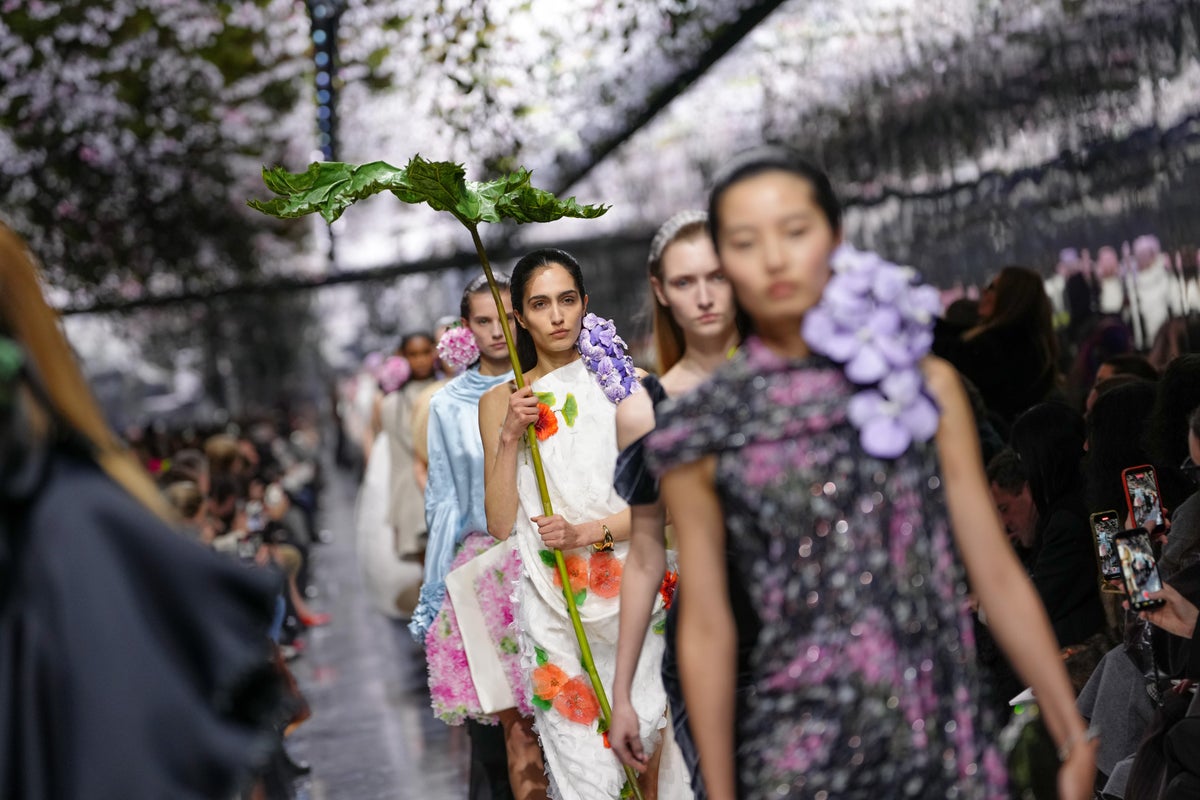
The logic of nature – its precision, strangeness, and rejection of symmetry – was carefully translated into material. Feathered skirts fell like plumage in mid-molt; speckled capes resembled scattered petals; and ruffled hems mimicked the torn edges of flowers. Conical clutches resembled seashells, and cascades of green sprouted from pockets as if they had grown from the dress’s roots.
A New Take on Tradition
Flowers are, of course, Dior’s traditional motif. Anderson honored that lineage while turning it on its head. His flowers were not decorative but structural: formed into silhouettes, bulging from seams, floating around the body like living creatures. Hydrangea earrings skimmed the shoulders, and clusters fanned out like peacock tails.
Colors and Textures
The colors confirmed the forecast trends for the year, with a bold palette that included lime and lilac, fiery orange red, powder blue, and the soft pink tones of Dior. These hues enlivened gowns with billowing ruffles and layered panels, catching light on iridescent surfaces while shimmering feathers clung to sculpted shapes.
Reinterpreting Couture
Even shoes were reinterpreted in the context of couture. While high heels are usually the first choice, metallic flats, sneakers, and loafers showed that couture doesn’t have to falter on stilettos. Glamorizing flat shoes feels thoroughly, if not belatedly, radical. Knitwear also appeared in deconstructed wools and generous, tactile fabrics – materials that were considered unorthodox in couture but were elevated here into something more sophisticated.
The Final Look
The final look consisted of a sky blue silk dress decorated with flowers, which demonstrated restraint in tone but not in cut. The wedding dress – silk and chiffon, backless, with feathers flowing over the bodice and into a feather skirt – was both romantic and otherworldly, as if it were grown rather than made.
A New Era for Beauty
The collection took on a precision and detail only found in nature, but Anderson did his best to replicate it in fashion. The final message seemed to be that couture is no longer about preserving beauty based on heritage, but about allowing it to grow. As Vivaldi’s Spring filled the Mirror Room, the audience was left with a sense of wonder and excitement for the future of Dior under Anderson’s creative direction.
