

Introduction to China’s High-Tech Factory in Germany
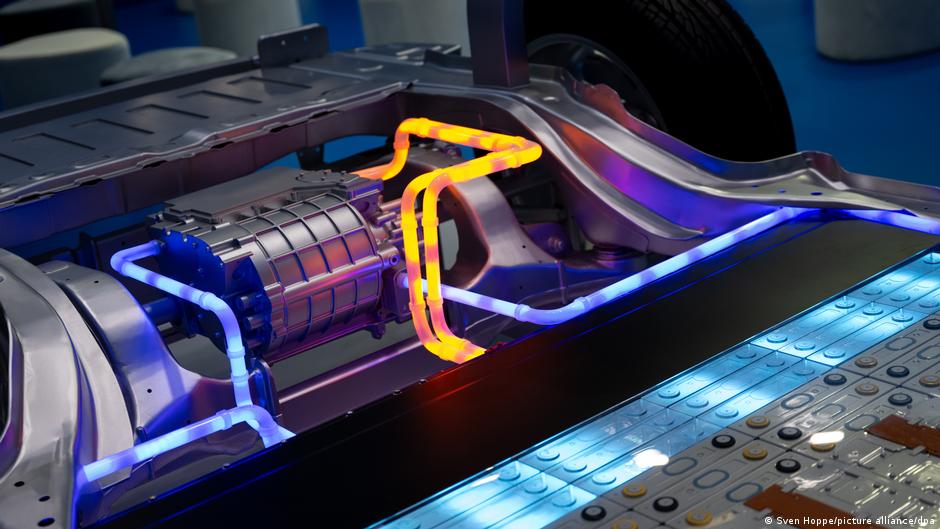
In a hall more than 100 meters long, countless robots hum, lights flash, and warning signals sound. Currently, only about a dozen people work on the floor, the rest of the work is done by powerful machines. The mysterious facility is not located somewhere in China, but in Arnstadt, a small town in the eastern German state of Thuringia. It is part of Contemporary Amperex Technology (CATL), the Chinese global leader in electric vehicle batteries.
How "Made in Germany" Helped China to the Top
The "Made in Germany" label served as a benchmark for modern manufacturing standards in China for decades. Already in the 1980s, Volkswagen’s joint venture in Shanghai impressed Chinese partners. More than 20 years later, under the slogan Industry 4.0, Germany increasingly relied on digitally networked production to increase productivity and efficiency. By then, China’s manufacturing sector was already eager to shed its image as a low-cost producer, and Germany’s Industry 4.0 initiative offered an opportunity.
China’s Strategy to Become a Global Leader
In 2014, the two countries signed cooperation agreements, and in May 2015, Beijing unveiled a strategic plan called "Made in China 2025" that aims to modernize its industry to become a global leader in key manufacturing sectors. Today, China has achieved this goal in many areas and has become a strong competitor for Germany. Chinese machine manufacturers delivered goods worth 20 billion euros to the EU in 2018, and this number is expected to increase to 40 billion euros by 2024.
Technology Transfer: China’s Fast Path to Success
Shortly after announcing its "Made in China 2025" strategy, Beijing introduced a series of measures that helped its companies acquire cutting-edge technologies or even entire companies in Europe. The takeover of the German robotics company Kuka by the Chinese Midea Group in 2016 seems to prove the critics right. China invested heavily in research, with so-called R&D spending rising from 1.37% of GDP in 2007 to 2.56% in 2022.
The Impact of Technology Transfer on Germany and Europe
Camille Boullenois, a China expert, said massive subsidies had enabled Beijing to achieve its "Made in China 2025" goals, such as reducing dependence on Western technology and gaining market share. However, she criticized the subsidy-driven approach as unsustainable, saying it had led to "enormous waste and weaker economic growth." The EU is currently considering setting conditions for Chinese companies investing in Europe, including clear rules on technology transfer, local value creation, and employment.
When "Made in China" Comes from Germany
However, Boullenois said that cooperation with China could be mutually beneficial if Chinese companies produce locally in Europe. An example of this could be the CATL battery plant in Arnstadt, as only around 10% of the more than 1,700 employees come from China. The company also works closely with local universities and chambers of commerce to promote young talent and operates a training center where around 20 trainees are currently learning careers such as mechatronics.
Collaboration Between China and Germany
The location has also attracted the Fraunhofer Institute, which has established its Battery Innovation and Technology Center (BITC) there, giving CATL engineers and German researchers the opportunity to work together on next-generation battery technology. Roland Weidl, head of the Fraunhofer Research Center, said the collaboration is "a win-win situation for industry, research, and business." Since Fraunhofer and CATL are both technology leaders in different areas, the collaboration works because "both partners are convinced that they can benefit from it."
