

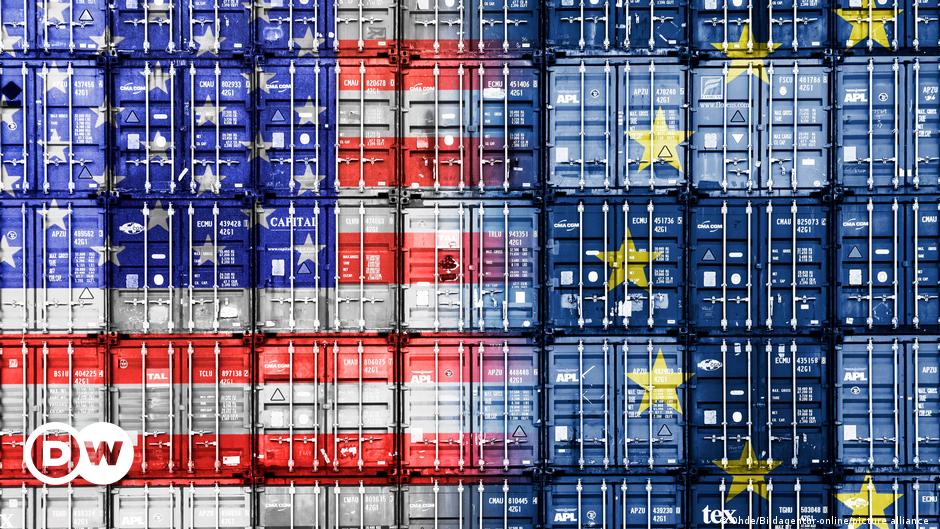
Introduction to US-EU Trade
The US and the EU have a significant trade relationship, with the EU being the US’s largest trading partner. The 27 member states of the EU form a substantial market for US goods and services. US President Donald Trump has argued that the US economy is at a disadvantage in global markets and has sought to reduce the trade deficit through tariffs.
Trade Between the EU and the USA
The EU and the USA generate more than 40% of global economic output and almost a third of world trade. In 2024, they exchanged goods worth more than $975 billion. Including services, total transatlantic trade reached 1.68 trillion euros. The EU has significant surpluses in vehicles and medicines, while the US has surpluses in oil, gas, and coal.
US Trade Deficit with the EU
The US imports significantly more goods from the EU than it exports to the bloc. The deficit widened from 156 billion euros in 2023 to 197 billion euros in 2024. The US trade deficit worldwide was around 1.17 trillion US dollars.
Trade in Services
In the services sector, the US has a significant surplus due to the growing dominance of technology giants. Financial and IT-related services, especially license revenues, also play a major role. In 2024, the US services surplus with the EU was 148 billion euros. When goods and services are added together, the overall US deficit shrinks to around 50 billion euros.
US Vulnerability in Trade Disputes
Given the increasing importance of digital services, tariffs or taxes in this area could hit the USA particularly hard. The EU could use its Anti-Coercive Instrument (ACI) to protect its member states from economic coercion. This could be a significant threat to the US, especially in the technology sector.
US Dependence on the EU as an Export Market
The US needs the EU as an export market, especially in the energy sector. The EU has sharply increased LNG imports from the US, with purchases reaching 81 billion cubic meters in 2025. This growing dependence affects both sides, and any disruption would not only affect Europe but also US LNG producers and gas companies.
Exposure of US Agriculture
Soybeans illustrate another risk of disruption. The US is the second-largest soy producer in the world, and the EU is among the largest buyers. EU counter-tariffs on soybeans could hurt US farmers and soybean exports, while the EU could offset losses by importing more soy from Brazil.
US Reliance on Europe to Finance its Debt
The US has the highest national debt in the world, with total federal debt over $38 trillion. Foreign creditors hold nearly half of all US debt abroad, with European creditors being significant holders. This reliance on European financing makes the US vulnerable to changes in EU economic policies.
Impact of Tariffs on the US Dollar
Tariffs increase inflation risk in the US, while disputes over trade policy, budget deficits, and interest rates increase global economic and political uncertainty. Experts believe that the decline in the dollar against the euro will continue, with further interest rate cuts from the US Federal Reserve expected. A weaker dollar is a double-edged sword, making US exports cheaper but also increasing import costs and fueling inflation.
