

China’s Energy Security Concerns
China sources up to a fifth of its imported oil from Iran and another 4% to 5% from Venezuela, often through secret channels to avoid United States sanctions. U.S. President Donald Trump’s move to oust longtime Venezuelan leader Nicolas Maduro, divert his oil to the United States and impose 25% tariffs on Iran-linked trade has raised serious questions about energy security in the world’s second-largest economy.
Impact on Oil Prices
Oil prices briefly rose on fears that China’s discounted Iranian supplies could be hit, while experts warned that the U.S. seizure of Venezuelan oil tankers could further restrict oil flows.
Can China’s Domestic Production Close the Gap?
Beijing has limited scope to draw on its domestic oil production to fill the gap. With most of China’s imported oil passing through the narrow, congested Strait of Malacca, Beijing has long viewed the route as a strategic vulnerability. The strait, patrolled by the U.S. Navy, became a potential chokepoint during Trump’s first term as bilateral tensions with Washington escalated.
Domestic Oil Production
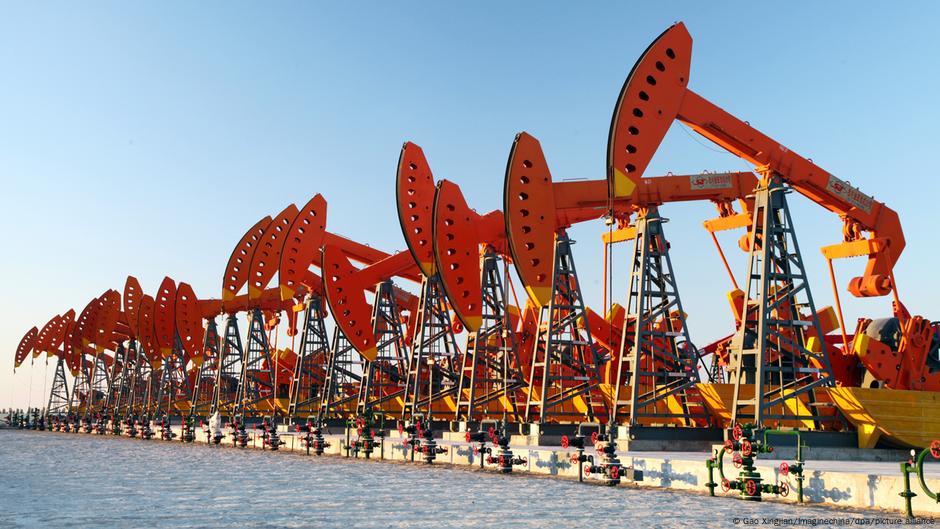
In 2019, President Xi Jinping ordered the intensification of domestic exploration and refining and launched the Seven-Year Action Plan and billion-dollar new investments by Chinese oil companies. However, these gains were modest. Domestic production rose from 3.8 million barrels per day (bpd) in 2018 to around 4.32 million bpd last year. But even growth from new wells, including tight shale fracking, could only offset the decline of China’s vast legacy fields.
Expert Analysis
June Goh, a senior oil market analyst, said cumulative production growth of 8.9% since 2021 was "huge" and exceeded Beijing’s target. But she warned that further production growth was unlikely to be "exponential" as China’s oil majors struggled to discover new reserves. Other experts have described the situation more clearly, stating that despite enormous investments, domestic oil production "hasn’t moved."
Oil Supplies Will Help Offset Losses from Iran and Venezuela
With domestic production offering little upside, Beijing is relying more on oil reserves. Since the end of 2023, Chinese politicians have significantly accelerated the expansion and replenishment of emergency reserves, so-called strategic petroleum reserves (SPR). The move was fueled by rising geopolitical tensions following Russia’s full-scale invasion of Ukraine and a global rise in energy prices.
Stockpiling Efforts
Goh believes stockpiling rather than increasing production will help China further strengthen its energy independence in the face of likely falling supplies from Iran, Venezuela, and Russia. "China currently has a cover period of 110 days, which is above the OECD target of 90 days," she said, referring to both the SPR and commercial reserves.
Renewable Energy and Electrification
While reserves provide an immediate cushion, longer-term resilience lies in the other measures China has taken to strengthen energy security. This includes rapid electrification and a record expansion of renewable energies. Beijing has spent the last five years aggressively converting oil-consuming sectors, including transportation and heavy industry, to electricity.
Electric Vehicles and Renewable Capacity
Electric vehicles (EVs) now account for well over half of new car sales, and entire city bus fleets in Shenzhen, Guangzhou, and dozens of provincial capitals are already fully electric. China added more solar capacity than the rest of the world combined in 2024 and 2025, while also installing record wind turbines in Inner Mongolia, Xinjiang, and coastal provinces.
Future Plans
As China’s leaders prepare to unveil the next five-year plan, further investment in domestic fossil fuel production, electrification, and renewable energy is expected to play a major role. Combined with maintaining this growth rate in renewable energy, China could replace large amounts of gas or coal in electricity generation, and electrification can replace all fossil fuels in industry, transport, and buildings.
