
Introduction to US Interventions in Latin America
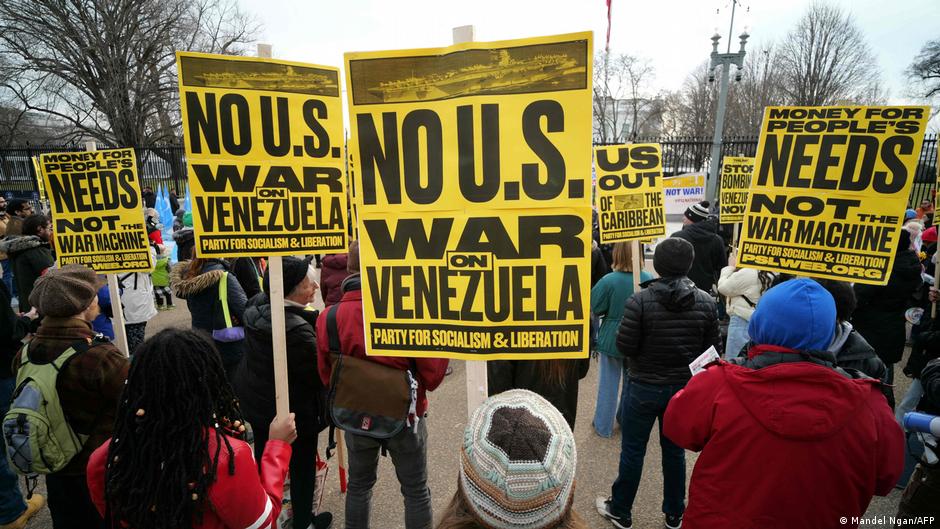
In the early hours of January 3, 2026, U.S. forces captured controversial Venezuelan President Nicolas Maduro and his wife Cilia Flores. Both were transferred to the United States, where Maduro has now been deposed and is facing drug terrorism charges. The US operation, illegal under international law, marks the latest in a long history of American interventions in Latin America, often justified by Washington on claims of regional security.
The Monroe Doctrine
The Monroe Doctrine dates back to 1823, when President James Monroe warned European powers against interfering in the affairs of the Western Hemisphere. The doctrine was later expanded upon by President Theodore Roosevelt in 1904 in what became known as the Roosevelt Corollary. Roosevelt argued that the United States had the right to intervene in Latin American countries to prevent what he called "chronic misconduct" and instability.
US National Security Strategy
The US National Security Strategy, published in 2025, states: “After years of neglect, the United States will reaffirm and enforce the Monroe Doctrine to restore American supremacy in the Western Hemisphere and protect our homeland and our access to key geographic areas throughout the region.” This doctrine has been referenced by recent US presidents, including Trump, who said: "The Monroe Doctrine is a big deal, but we have surpassed it by a lot, by a lot. They now call it the ‘Donroe’ Doctrine."
Examples of US Interventions in Latin America
Below are five examples of U.S. interventions in Latin America since World War II:
1954 Guatemala: Government Overthrown in CIA-Backed Coup
The US supported the overthrow of Guatemala’s democratically elected president, Jacobo Arbenz, who had introduced land reforms that would nationalize property, including that of the US-based United Fruit Company. The Eisenhower administration viewed Arbenz’s government as a communist threat, and CIA agents supported a force of Guatemalan exiles, installing Carlos Castillo Armas as president. Armas quickly reversed the land reforms.
1961 Cuba: Bay of Pigs Invasion
After Fidel Castro’s communist revolution in 1959, the United States became increasingly concerned about Cuba’s relations with the Soviet Union. President Dwight D. Eisenhower devised a plan to overthrow the Cuban leader, which was carried out by President John F. Kennedy in 1961. 1,400 Cuban exiles trained by the CIA landed in the Bay of Pigs, about 200 km from the capital Havana, but the plan quickly failed, and Castro sent around 20,000 soldiers to the beaches, forcing a surrender.
1973 Chile: Covert Operations and a Military Coup
The United States opposed the government of socialist President Salvador Allende in Chile from the start, viewing his nationalization of key industries and close ties to the Soviet Union as a threat to U.S. interests. Washington attempted to destabilize Chile through diplomatic pressure, financial restrictions, funding of opposition groups, and anti-Allende propaganda. In September 1973, the Chilean military led by Augusto Pinochet overthrew Allende, with the former seizing power after Allende’s death during the coup.
1983 Grenada: Operation Urgent Fury
After the assassination of Grenada’s Prime Minister Maurice Bishop during an internal coup, President Ronald Reagan ordered an invasion of Grenada, citing the need to protect U.S. citizens and ensure the security of the region. The invasion, known as Operation Urgent Fury, came at a time when the United States was concerned about Grenada’s relations with the Soviet Union and Cuba.
1989 Panama: Operation Just Cause
In December 1989, President George H. W. Bush launched a full-scale invasion of Panama as part of Operation Just Cause, sending approximately 24,000 troops to remove General Manuel Noriega from power. Noriega, once a US ally, was charged and imprisoned in the US for, among other things, drug trafficking, extortion, and money laundering. The USA installed Guillermo Endara as president after the invasion.
