

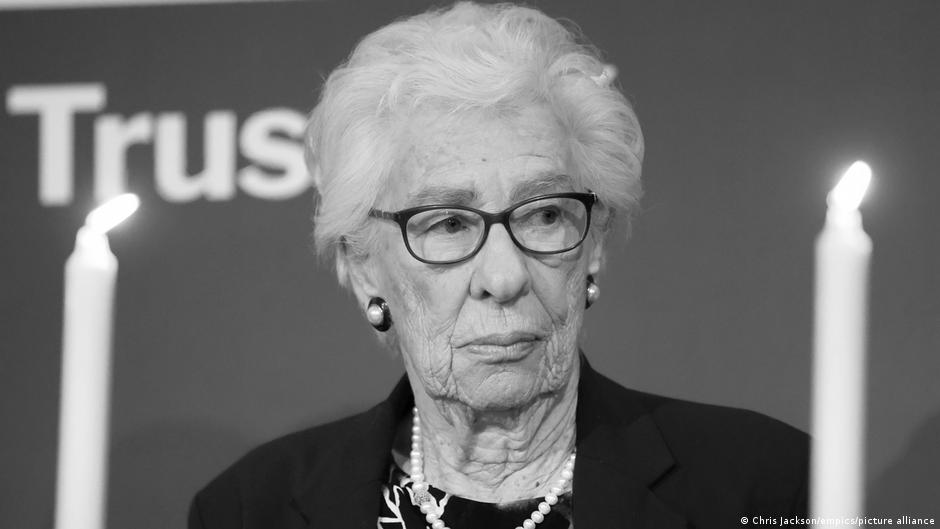
Introduction to Eva Schloss
Eva Schloss, a Holocaust survivor and stepsister of Anne Frank, has died at the age of 96. Her family expressed hope that Schloss’s legacy would "continue to inspire" through books, films, and resources left behind by the Auschwitz survivor. The family stated, “We are incredibly proud of everything Eva stood for and achieved, but right now we are grieving.”
Tributes to Eva Schloss
There have been numerous tributes to Schloss, including from Britain’s King Charles III, who said he was "privileged and proud" to have known her personally, adding that both he and Queen Camilla "deeply admired her". The Austrian-born Schloss was honorary president of the Anne Frank Trust UK. She dedicated her life to educating people about the risks of intolerance and prejudice. Schloss once said, "We must never forget the terrible consequences of treating people as ‘others,’"
A Beacon of Hope and Resilience
Dan Green, chief executive of the Anne Frank Trust, described her as “a beacon of hope and resilience”. He said, “Your unwavering commitment to combat prejudice through Holocaust education has left an indelible mark on countless lives.” The Anne Frank Trust deeply mourns her loss and extends heartfelt condolences to her family and friends at this difficult time.
Eva Schloss’s Survival Story
Schloss was a teenager when the Nazis took over her native Austria, resulting in her family fleeing to the Netherlands. There she met Anne Frank, whose family had fled Frankfurt to seek refuge in Amsterdam. As the situation in the Dutch city began to deteriorate, the von Schloss family began moving to reduce the risk of Nazi capture, before being betrayed by a Nazi sympathizer who extradited them. The 15-year-old Schloss was taken to Auschwitz with her mother Fritzi, her father Erich, and her brother Heinz. Erich and Heinz did not survive, but Eva and Fritzi did. After the war, the two met again, and her mother married Otto Frank, Anne’s father.
The Lasting Impact of the Holocaust
While she survived, the Holocaust left both physical and mental scars, leaving Schloss unable to connect with humans for years and also suffering from nightmares. Physically, Schloss suffered from digestive problems due to the famine in Auschwitz, as well as frostbite due to her long journey to freedom after the end of the war in the winter of 1945.
