

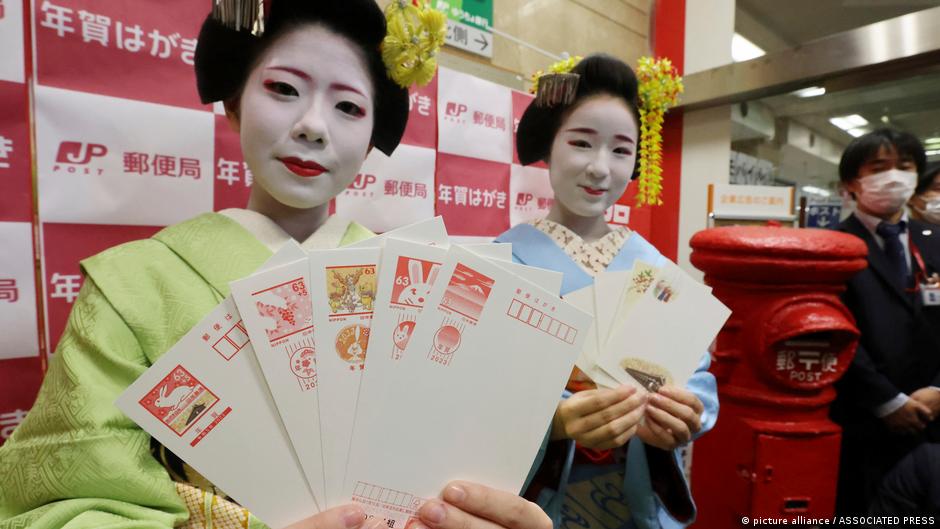
The Decline of Nengajo: Japan’s Fading New Year Card Tradition
The time-honored Japanese tradition of sending “Nengajo” New Year cards is fast fading as today’s Japanese are too busy as the year comes to an end and are happy to rely on technology to send festive greetings. And while some admit it’s a little sad to see a seasonal staple disappear, most just shrug it off.
The Steady Decline of Nengajo
Shipments of decorative “nengajo” have been steadily declining for several decades, falling from a peak of nearly 4.5 billion cards issued in 2004 to just 1.07 billion in 2025. When the 2026 figures are released, they are expected to show the decline has continued.
“This is the first year I haven’t sent ‘nengajo’ at all,” said an academic who lives in Yamanashi Prefecture in central Japan. “I’ve slowly gotten out of the habit of sending cards every year, but this is the first time I’m not sending any,” she told. “I used to diligently write and send 200 letters every year to colleagues, friends and family, but times have changed.”
An Obligation to Send Cards
The commitment to send out so many cards — even to the most distant contacts — is almost overwhelming at the start of each December. And that got worse on January 1st, the day the cards are delivered, when she realized that she had inevitably forgotten to send someone a card.
And while tradition dictates that in such an emergency it’s still socially acceptable to quickly dispatch a package and send it in the mail so that it arrives the next day or so, it’s still something of a faux pas.
A Shift in Tradition
Instead of ‘nengajo’, many people are writing a few letters to the people closest to them, sending Christmas cards to friends abroad, and then either calling everyone else or sending messages via social media. While Japanese people were once expected to send cards to all work colleagues, this is no longer the case as people today tend to separate their work and personal lives more.
“In a way, I think it’s a little sad to lose this tradition, but our lives have changed completely since the first release of Nengajo,” she said.
A Brief History of Nengajo
“Nengajo” can be traced back to the Heian period (794-1192), when the aristocratic classes sent greetings to each other on the occasion of the Lunar New Year. The trend caught on among the upper classes and then the rest of society before really gaining momentum in the Meiji era (1868–1912) with the creation of a modern postal system.
Early versions were hand-written and included elaborate animal-of-the-year motifs according to the Chinese zodiac. The year 2026 is the Year of the Horse, which will be followed by the Goat, Monkey, Rooster, Dog, Pig, Rat, Ox, Tiger, Rabbit, Dragon and Snake.
The Impact of Technology
Interest increased with the introduction of home computers and printers, which allowed people to create their own designs, often including personal photos and messages. And while technology boosted the popularity of “Nengajo” back then, today it is destroying the tradition.
“Just a few years ago, I used to send about 100 emails every year, but I’ve completely stopped doing that because all the people I wanted to send them to are already saved on my phone,” said a worker for a large multinational in Yokohama.
“It’s much easier and quicker to send an electronic message than to go through the trouble of writing individual cards and sending them to everyone I know,” she said.
Courtesy and Respect
Even among those who have decided to stop sending cards, the sense of politeness and respect remains. This year, “nengajo-jimai” emerged, where people tell the recipient that this is the last year they will continue the tradition and thank them for being a valued friend or colleague.
“Yes, it’s a little sad for me not to send cards, and I’m sure I’ll miss not receiving them on New Year’s Day, but I’m always so busy as the end of the year is approaching and writing cards has always been a bit last minute,” said a housewife from Saitama Prefecture, north of Tokyo.
“I make an effort to send messages through social media, and that’s how everyone I know gets them now,” she said. “Even my husband, who had to send hundreds of cards to business contacts and suppliers every year, rarely sends any anymore. It’s just not as important anymore, even in the business world.”
