

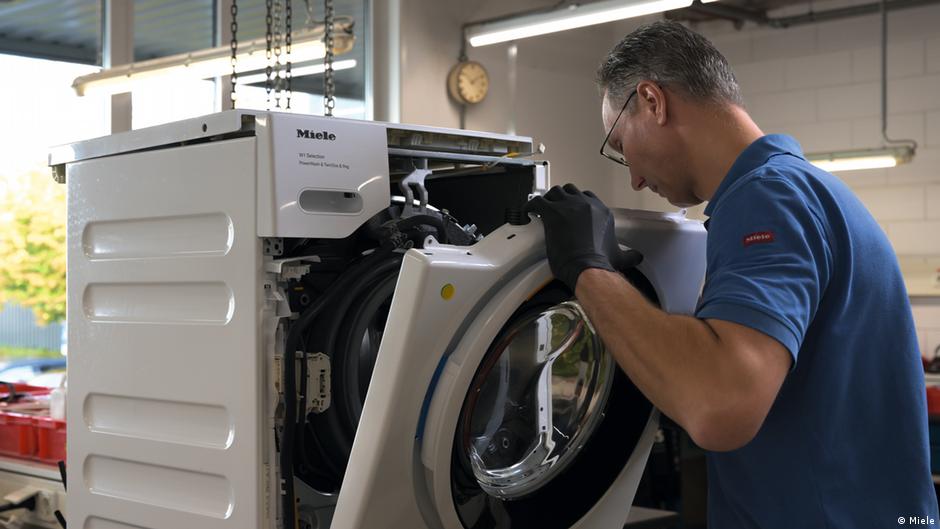
Introduction to Refurbished Appliances
Three years ago, German high-end home appliance manufacturer Miele began selling refurbished washing machines in the Netherlands alongside its regular products. The aim is to collect returned Miele washing machines, including those with scratches or easily repairable defects, repair them and resell them online. The German company chose the Netherlands because Miele products are very popular there and consumers there are comparatively open to refurbished products.
Expanding Customer Base
The company hopes to reach new customer groups with the project. Max Wagner, who leads Miele’s sustainability team, says sales of refurbished appliances have not cannibalized his company’s sales of new models, as initially feared. “We were able to expand our customer base to include younger, digitally savvy groups who might otherwise have chosen a competitor for cost reasons,” Wagner said. Surveys have shown that sustainability aspects such as resource conservation and environmental protection are of secondary importance for customers when purchasing refurbished products.
Refurbished Circuit Boards
Another Miele pilot project focuses on the refurbishment of circuit boards. When repairing their washing machine, dishwasher or coffee machine, customers have the choice between installing a new circuit board or installing a refurbished circuit board. When repairing older devices, customers often opt for the cheaper, refurbished option. Miele will have remanufactured around 12,000 electronic components in 2024; the pilot project is running in five European countries, including Germany.
Challenges of Refurbishing Large Appliances
Washing machines are particularly suitable for reuse because they are relatively expensive and are sold in large quantities, so there are many returns. This means that spare parts are available for a long time. Customers aren’t too worried about scratches either, as many washing machines are in the basement. However, reselling large home appliances can be complicated. Smartphones are well suited to the used market, but restarting home appliances is far more complicated, not least because it requires two technicians to assemble a washing machine and a water connection to test its various functions.
Logistics and Infrastructure
Professional renovations with a product guarantee require their own logistics chain. The first difficulty is getting used but usable equipment. “You have to collect them directly from the customer or set up collection points.” Premium manufacturers like Miele, which have their own sales channels, have an advantage here. Other producers need to think about how they work with retailers, as retailers become part of the process. When returns become part of a cycle, new sales are generated.
Growth Market for Refurbished Appliances
MediaMarktSaturn, Europe’s largest electrical retailer, offers around 260 “as new” household appliances such as extractor hoods, mini-refrigerators and hobs. In addition, there are thousands of used smartphones and laptops on offer. The Thermomix, a versatile kitchen appliance from the German manufacturer Vorwerk, is one of the most sought-after used products. Even items that are several years old still achieve triple-digit prices on second-hand platforms. This is due to the longevity and reputation of these products, as well as the availability of replacement parts, similar to Miele washing machines.
Future of Refurbished Appliances
There are now companies that specialize in the processing of old devices. This includes I-Project, the company behind renewed.store, which buys, tests, cleans and resells Vorwerk kitchen products. The process is similar to selling used smartphones. Customers visit a website, select their model, evaluate the condition of their device and receive an initial non-binding offer. After inspecting the device, the company confirms or changes the offered price and the deal can be completed. While consumers who want new products without any signs of wear are still in the majority, the refurbished segment is growing.
