

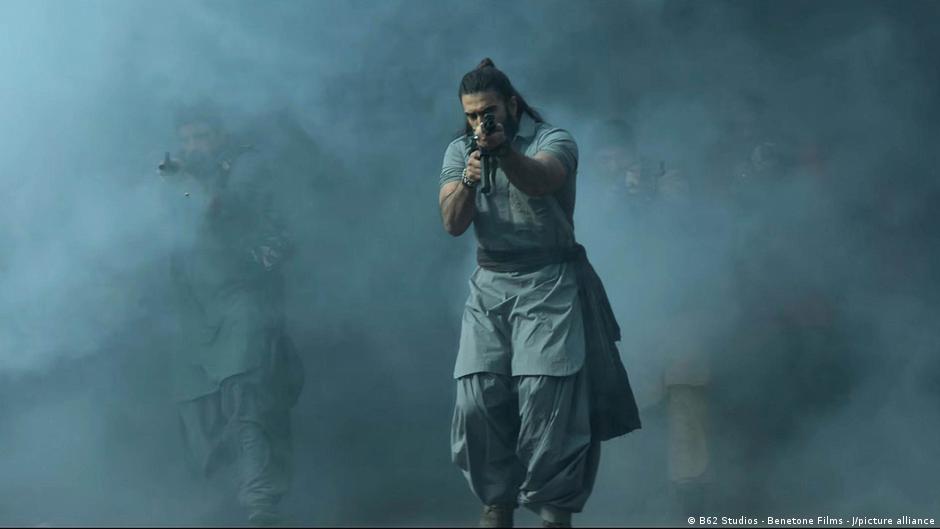
Introduction to Dhurandhar
A Hindi-language spy thriller titled Dhurandhar has become a huge box office success in India but has also divided opinions. In the 3.5-hour film, popular actor Ranveer Singh plays an Indian spy who infiltrates criminal networks in Pakistan’s sprawling city of Karachi to neutralize threats to India’s national security. The drama is set against the backdrop of tensions between arch-rivals India and Pakistan, two nuclear-armed South Asian neighbors who delivered heavy rocket, drone and artillery fire for days earlier this year.
Box Office Success
The film was a huge success at the box office this year and was praised for its plot and action sequences. However, critics say it is just the latest in a series of films that aim to promote hyper-nationalist narratives. They argue that since it came to power in 2014, Bollywood has increasingly promoted the ideology of India’s ruling Bharatiya Janata Party (BJP) and promoted politically convenient readings of history, often at the expense of nuance.
Criticisms of the Film
Some critics argue that the film is an example of "lazy, state-sponsored, majoritarian filmmaking that serves power to make quick profits, make money and conform to those in authority." They claim that these films bombard audiences with violence, evoking raw anger, resentment, fear and anxiety, and leaving them without resolve or the means to process these emotions. This is seen as a form of propaganda that can increase hate speech, violence, and discrimination.
BJP’s Response
The BJP has rejected the characterization of these films as propaganda. The party argues that the film trend represents a broader assertion of India’s right to tell its own stories on its own terms. A BJP spokeswoman, Shazia Ilmi, drew parallels with Western cinema, where geopolitical opponents regularly appear as villains. She argued that there is a double standard at play, where Western nations are allowed to produce films that celebrate their military achievements and national identity, but India is branded as propaganda and polarization when it does the same.
Dramatization vs Propaganda
The key difference between dramatization and propaganda is understanding whose ideology drives the film’s narrative and what evidence supports it. Propaganda arises when films brazenly promote the ruling government’s ideology as ‘historical truth.’ These films typically receive government support and tax exemptions. Film critics argue that making politically distorted films or those expressing bigotry can be attributed to either choice, convenience, or coercion – or a combination of all three.
The Impact of Propaganda Films
The impact of propaganda films can be significant, as they can shape public opinion and influence people’s perceptions of certain groups or ideologies. In India, the trend of propaganda films has been on the rise, with many films promoting a hyper-nationalist narrative. This has led to concerns about the potential for increased hate speech, violence, and discrimination. Film critics and experts argue that filmmakers have a responsibility to be more nuanced and balanced in their portrayal of sensitive incidents, and to avoid promoting a particular ideology or agenda.
