

Space Exploration and the Human Body
Space is an alien environment for humans. Our bodies are built for gravity; when we take it away, profound changes occur in our biology. The muscles and bones that hold us upright on Earth become weak. Body fluid that normally collects in our legs flows into our upper body, changing the shape of the heart and damaging the eyes. And suddenly, genes that are inactive on Earth turn on. Others fall silent.
Lessons from the International Space Station
These are some of the lessons from 25 years of studying astronauts living and working on the International Space Station (ISS). The ISS has played a crucial role in understanding how the human body adapts to space travel. Astronauts on the ISS have to exercise for two hours a day to maintain their physical health. The effects of microgravity on the musculoskeletal system are the reason why astronauts have to train so extensively.
Mastering the Physical Challenges of Space
Four astronauts will soon embark on a test flight around the moon, paving the way for future missions that land on the surface and ultimately establish a long-term presence in search of ice and minerals. British astronaut Tim Peake knows all about the rigors of microgravity, having spent 186 days in orbit. "What you’re essentially doing is taking relatively fit, healthy people and putting them through a 20-year aging process in a period of about two months," he said.
The Effects of Microgravity on the Human Body
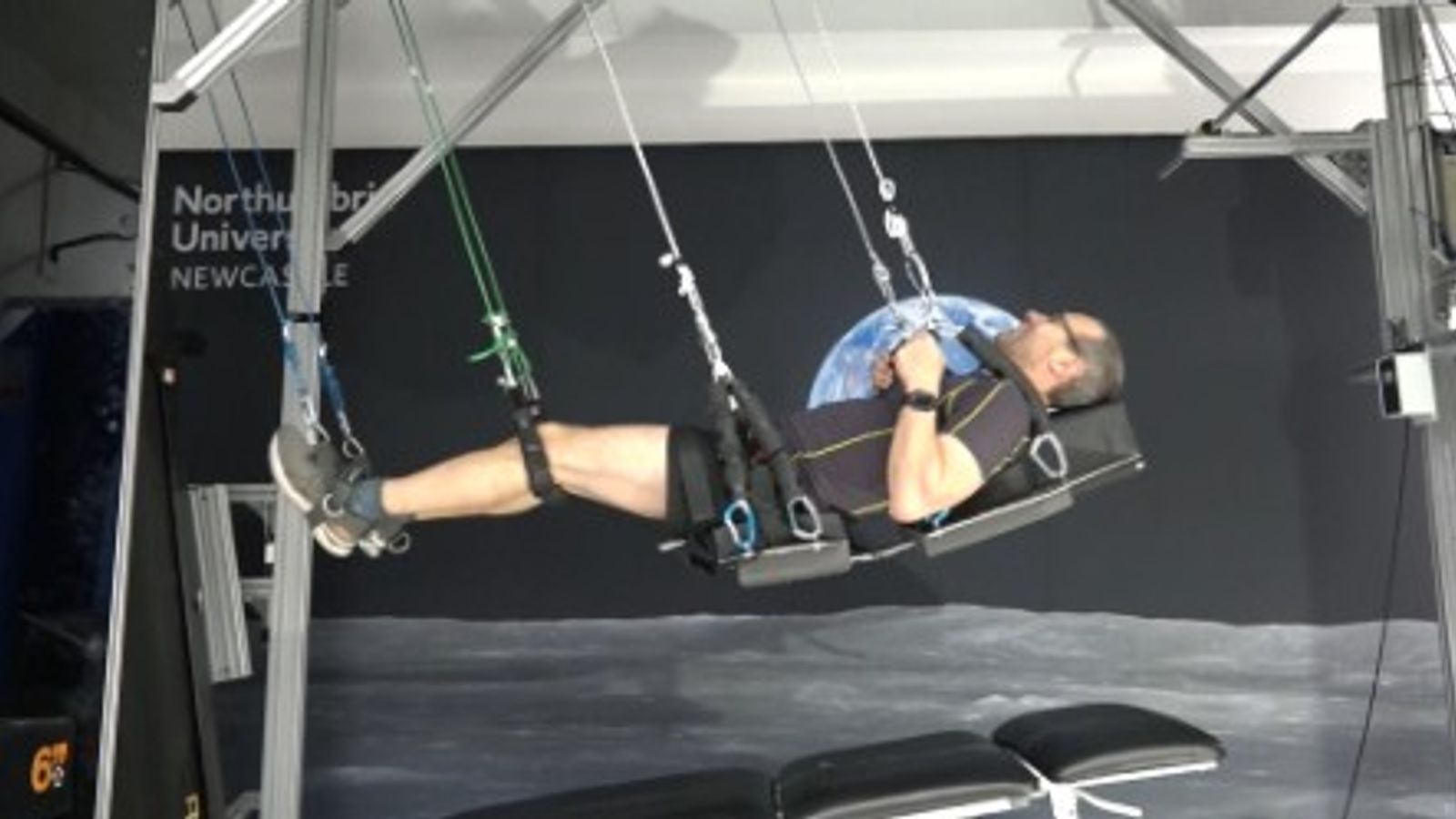
The muscles and bones in the lower half of the body become weaker if they don’t have to bear any weight. The effect can be profound, with astronauts experiencing a similar amount of bone loss to that experienced over 10 years as part of the normal aging process on Earth. The University of Northumbria has an aerospace medicine laboratory where scientists are trying to find ways to help people adapt to space travel. They are using a variable gravity suspension system to study how the muscles and skeleton move without gravity and develop exercises that could prepare astronauts for a mission and rehabilitate them upon their return.
Exercise in Space
Exercise is a huge time commitment for astronauts. Scientists at the University of Northumbria are trying to reduce the effort that astronauts have to put in. One strategy is to use an inflatable cuff that acts as a tourniquet, restricting the flow of blood and oxygen to the muscles. This system was tested by astronauts on the SpaceX Fram2 mission earlier this year and will be optimized for further testing in the future.
Another Invisible Danger
When astronauts leave the protective bubble of Earth’s magnetic field, they are exposed to cosmic and solar radiation. High-energy particles from the Sun or outside our solar system can increase radiation levels up to 150 times those on Earth, damaging DNA and increasing the lifelong risk of cancer. Should a solar flare occur during the Artemis astronauts’ trip to the Moon, they will seek shelter in an area of the Orion capsule protected by the heat shield and containing water tanks and food supplies.
The Future of Space Travel
There is no doubt that the Artemis astronauts are better prepared and better protected than the Apollo-era astronauts heading to the moon. However, there are still big gaps in our knowledge about how to survive in space. The ISS plays a big part in this, but more research is needed to understand the effects of long-term space travel on the human body. As we look to send people to Mars, we will need to find ways to reduce the risk of radiation exposure and develop more efficient exercise routines for astronauts.
