

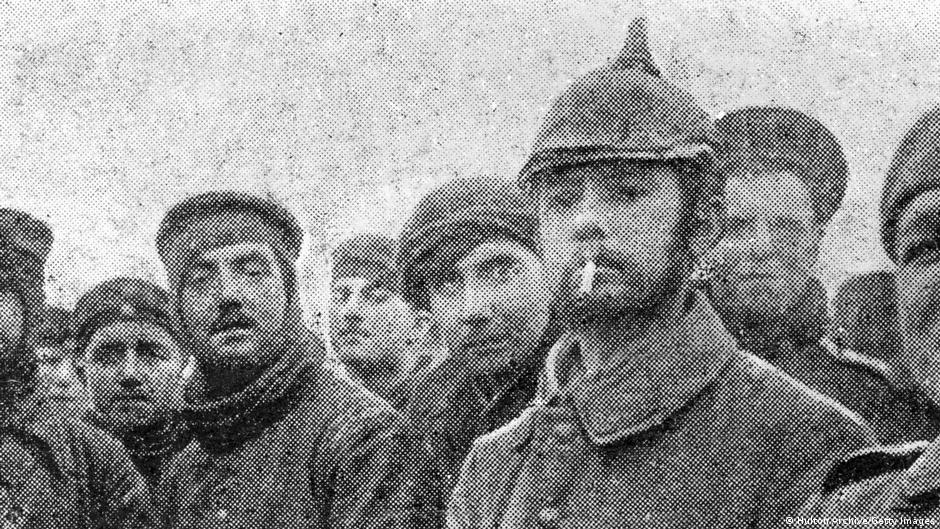
Introduction to the Christmas Truce
December 1914. The First World War had been raging for five months. Between minefields and barbed wire fences, millions of soldiers faced each other in trenches along the Western Front, sometimes only about 30 meters apart. The battle area stretched from the English Channel through Belgium and France to the Swiss border.
Life in the Trenches
As the war dragged on, soldiers huddled in their shelters, where rats, lice, cold and poor food wore them down and death loomed over them. Beyond the trenches, between the enemy lines, lay the muddy hell of no man’s land, where the bodies of fallen comrades lay out of reach.
Disillusionment at the Front
The war had already claimed hundreds of thousands of lives – English, French, Belgian and German – blown to pieces by shells, riddled by machine gun fire and impaled with bayonets in hand-to-hand combat. Many German soldiers had rushed into battle because they believed victory was in sight. They thought they would be home with their families by Christmas – at least that was what German Emperor Wilhelm II had promised. The French and British also believed their leaders when they said the troops would return home quickly. But disillusionment soon spread at the front. Every day the men faced death, even on December 24th. How could one get into the Christmas spirit under such circumstances?
The Start of the Christmas Truce
Then something unexpected happened. In the middle of the freezing December night, a lone German soldier began singing “Silent Night” in the trenches near the Belgian city of Ypres. More and more men joined. The British on the other side of no man’s land could hardly believe their ears. “Silent Night” was also known in England.
A Moment of Peace
At first, the British did not trust the “Huns,” as the Germans disparagingly called them, and wondered whether they had been lured into a trap. But then they applauded and started singing along. The Germans responded with shouts of “Merry Christmas” and shouted: “We don’t shoot, you don’t shoot!” The first brave soldiers on both sides climbed out of the trenches, stood among the corpses of their dead comrades and shook hands.
Christmas Celebrations in the Trenches
Similar scenes occurred across much of the Western Front. In Fleurbaix, near the English Channel, German soldiers placed decorated Christmas trees on the edge of their trenches. The bright light came from candles, not muzzle flashes. To boost morale, the German high command had thousands of trees delivered to the front. Leaders knew how difficult it was for soldiers to be away from their loved ones on Christmas Eve.
Exchanging Gifts and Playing Football
Thousands of soldiers exchanged small gifts that evening, swapping corned beef for sausages or Dresden stollen for plum pudding. They shared wine, rum and cigarettes and showed each other photos of their brides, wives and children. Uniform buttons were exchanged as souvenirs. Most of the men were British and German, but some French soldiers also joined the armistice and brought out their supplies of champagne for Christmas. They even played football, using German spiked helmets and British field caps as goalposts.
A Short-Lived Ceasefire
The men on both sides also cared about something else: the possibility of burying fallen comrades in no man’s land. These were moments of humanity in a brutal war. Not everyone on the Western Front was in the mood to fraternize with the enemy. In some areas the fighting never stopped. This was exactly what senior officials on both sides wanted. They were deeply opposed to the Christmas Truce and believed that such expressions of friendship should never be repeated, even viewing them as treason.
The End of the Truce
The First World War ultimately claimed the lives of around 9 million soldiers and countless civilians. The soldiers of 1914 showed how simple peace can be: Lay down your weapons and turn to your enemy. The Christmas Truce was a brief moment of peace in a long and brutal war. It was a reminder that even in the midst of conflict, humanity can prevail. But it was short-lived, and the war continued for another four years, leaving deep scars that would take decades to heal.
