

Introduction to Deutsche Bahn’s Crisis
In mid-December, Evelyn Palla, the newly appointed CEO of Deutsche Bahn (DB), presented a comprehensive restructuring plan for the German state railway operator, which is due to come into force in 2026. After receiving approval from DB’s supervisory board, Palla said the company would cut around 30% of its senior positions to slim down management, decentralize decision-making, and improve timeliness and efficiency through a more agile organization.
Punctuality Issues
The renovation marks a low point for Deutsche Bahn’s performance. This fall, punctuality fell to a new record low: Only 55% of long-distance trains arrived less than six minutes late – the company’s official definition of "on time". Punctuality has been deteriorating for years, making DB one of the worst-performing companies in Europe. Delays and cancellations have become part of everyday life for commuters, especially in densely populated regions where passengers can now consider themselves lucky if every second train arrives on time.
A Cross-Border Embarrassment
The crisis acquired an international dimension in the summer of 2024 when Switzerland banned Deutsche Bahn trains from its rail network on the grounds that chronic delays would lead to disruptions to the Swiss timetable. The decision made clear that Germany has not invested sufficiently in its rail system for decades and halted the decline of its transport infrastructure. According to the Federal Ministry of Transport, around half of the country’s railways are in mediocre, poor, or inadequate condition.
Three Decades of Decline
Over the last 30 years, Germany has only spent a fraction of what neighboring countries such as Switzerland and Austria have invested in maintaining and expanding their rail networks. At the same time, the German rail network has shrunk despite increasing demand, and more and more people are commuting longer distances to work. The result is a network that carries more traffic on fewer tracks – many of which are in poor condition – a combination that lies at the heart of Deutsche Bahn’s problems.
Memories of a Different Time
Jens Kaminski, an experienced train driver who has worked for the DB since 1994, remembers a completely different time. At that time, the expression “punctual as the train” was still used in Germany. "When you walked through the village back then, people greeted you like a firefighter – like a hero," Kaminski said. "Today it’s more like: Oh, he’s a train driver. You’re nothing." There was once a different saying among railway workers: the timetable is the law. Kaminski remembered why things were “different” during those years. "We had 12 people on standby at the depot. If something went wrong – a breakdown, anything – they would step in and fix the problem. No problem. There are no on-call crews today. Too expensive."
From Reform to Cuts
Kaminski’s career closely reflects the modern history of Deutsche Bahn. He began his work in 1994, the same year that rail operators in East and West Germany merged to form Deutsche Bahn AG, just four years after reunification. The new company was intended to embody market-oriented reform. As a 100% state-owned corporation, DB had the task of becoming competitive and profitable, with the long-term goal of listing the shares on the stock exchange. What followed was aggressive cost cutting. Investments in both infrastructure and personnel were reduced in order to make the company more attractive to investors.
Auditors Sound the Alarm
The Federal Audit Office has repeatedly criticized Berlin for failing to fulfill its responsibilities as the owner of the rail operator. In their most recent report, the auditors wrote: “For three decades, the federal government has failed to address key rail policy issues.” Further down it says: "Deutsche Bahn has long failed to meet customers’ expectations of punctuality and reliability. The company is in a constant crisis and is in need of reform." The court also pointed out the government’s constitutional obligation to maintain rail infrastructure as a public good and ensure reliable train service.
A Swiss Counterexample
Switzerland faced similar challenges in the 1990s but took a different approach. Like Germany, it converted its railway operator into a stock corporation with the state as the sole shareholder. Unlike in Germany, it was made clear that the main purpose of the rail system was public service and not profit. Peter Füglistaler, a former boss at Swiss railway operator SBB, says that the railway infrastructure should not be designed to “make profits”. “The aim is to provide capacity and punctuality – benefits for everyone,” he said, adding that running a railway requires a management philosophy that focuses on reliability rather than financial returns.
A Long Road Lies Ahead
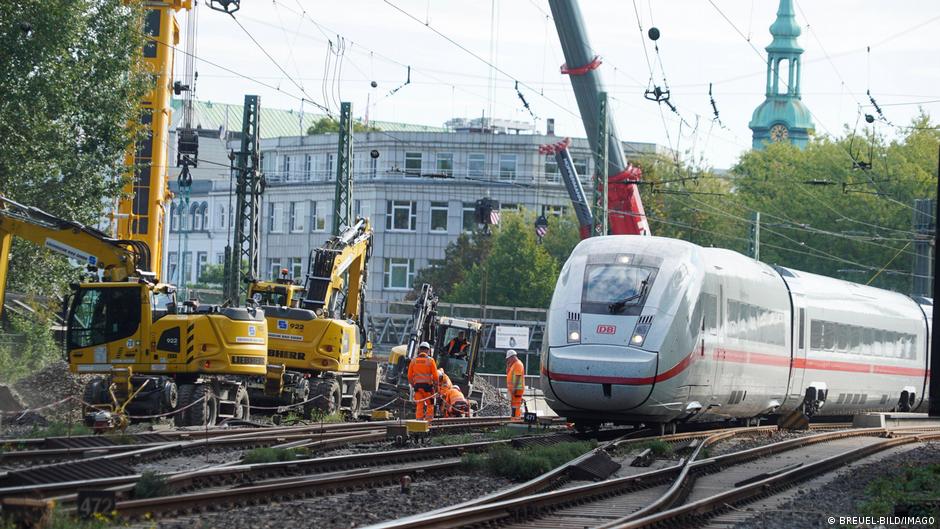
The neglect of rail in Germany is often linked to the strong automotive culture. Over the past three decades, successive governments have invested about twice as much in roads and highways as in rail infrastructure. Nevertheless, there are signs of change. Palla is the first female CEO of Deutsche Bahn and the first CEO with a train driver’s license. Major investments are already underway. Of the 500 billion euros in new debt that the new federal government took on to modernize the military and public infrastructure, around 150 billion euros are earmarked for the railway system. For passengers, however, the turnaround will not come so quickly. Construction and repairs are expected to cause further disruption in the near future. That means delays are likely to get worse before trains become more reliable.
