

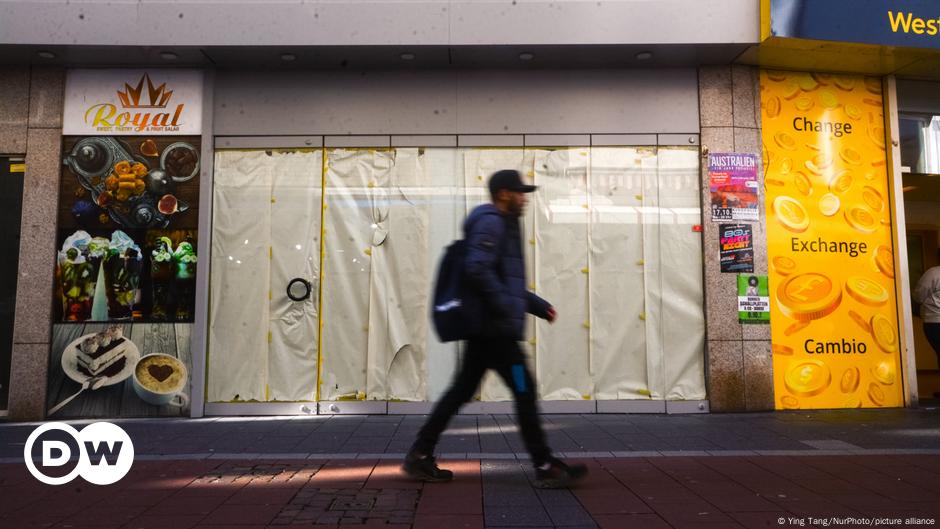
Economic Downturn in Germany
The first three quarters of 2025 have shown that smaller German companies have been disproportionately affected by the nearly three-year economic downturn in Europe’s largest economy. According to Volker Treier, chief analyst of the German Association of Chambers of Industry and Commerce, the "wave of insolvencies continues," with small and medium-sized businesses being particularly troubled.
Rise in Insolvencies
A recent survey by the German Association of Chambers of Industry and Commerce found that almost every third company with fewer than 20 employees expects their business situation to deteriorate. These companies make up around 85% of all companies in Germany. Official figures confirm this trend, with the Federal Statistical Office announcing that German district courts recorded 18,125 corporate insolvency applications by the end of September, a 12% increase from the same period last year. This makes the number of corporate bankruptcies in the first three quarters of 2025 the highest since 2014.
Small Businesses at Risk
It is no surprise that small businesses are disproportionately exposed to a stagnant economy. Steffen Müller, head of insolvency research at the Halle Institute for Economic Research, notes that the latest wave of insolvencies "occurs predominantly in the medium-sized segment." The average insolvent company employs about 10 people, but most are even smaller. General financial stress is also visible outside the corporate sector, with the number of personal bankruptcies rising again this year.
Impact on Jobs
Although most bankruptcies affect small businesses, the surge has also led to a sharp increase in the number of jobs lost or at risk. According to estimates, around 170,000 jobs will be affected this year, compared to fewer than 100,000 before the global COVID-19 pandemic. However, economist Klaus-Heiner Röhl warns against overestimating the impact on employment, stating that "insolvencies do contribute to slightly higher unemployment, but the development is not dramatic."
Foreseeable Trend
Both economists believe that the rise in bankruptcies was widely expected. Müller notes that "an increase was foreseeable," even if the extent of the increase was "somewhat surprising." Röhl agrees, citing the ongoing economic stagnation in Germany and attributing the increase primarily to macroeconomic factors. He also mentions increased energy prices, Russia’s war in Ukraine, and the transition to climate neutrality as additional strains on companies’ finances.
Limited Signs of Relief
The Association of Insolvency Administrators and Trustees is cautiously optimistic, stating that "after the catch-up effects of the pandemic and the associated increase in insolvencies, developments are beginning to normalize." However, Müller assumes that the number of insolvencies in 2026 will remain close to the high level of the previous year, warning that Germany has entered a "red zone." Röhl also sees a possible relaxation, forecasting that if the German economy grows by around one percent next year, insolvency activity should also decline. Nevertheless, he warns that structural challenges will remain, including US tariffs, competition from China, and high energy costs.
