
Introduction to Na’vi
“It was a remarkable event in my life,” remembers the linguist Paul Frommer of his first meeting with James Cameron. Looking for someone to develop a constructed language for a science fiction film, the renowned director had emailed the linguistics department at the University of Southern California. In his application, Frommer convincingly expressed his enthusiasm for the challenge. “Welcome aboard,” Cameron told the linguistics doctor at the end of her first 90-minute talk in 2005. "My life really hasn’t been the same since then," Frommer said ahead of the release of the third film in the epic series, 20 years later.
Creating an Unusual Language
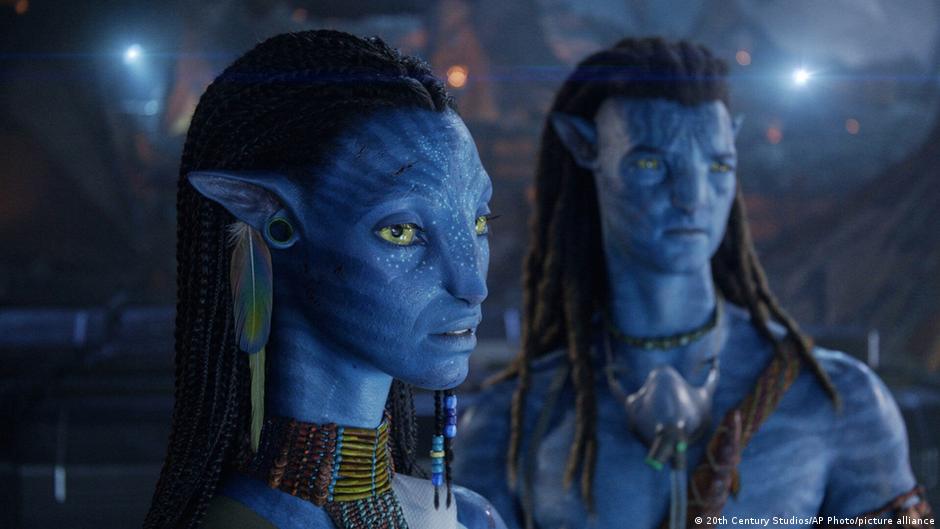
Cameron’s premise for the language was that it should sound "beautiful" – "of course that’s a subjective thing," says Frommer. It also had to be easy for the actors to learn, as it was clear from the start that there would be no electronic manipulation of the characters’ voices. "So the underlying assumption was that the Na’vi have a vocal production mechanism that is essentially the same as ours, allowing them to produce the sounds that we can produce in human speech." Although there are various aspects of Na’vi that can be compared to other languages, it cannot be directly associated with a single language. “I wanted to make it unusual,” says Frommer.
A Language “on Steroids”
When describing the process of language development, Frommer refers to the various “modules” used in linguistics – the building blocks with which he worked. The core of a language is, first of all, its phonetics and phonology, i.e. its “sounds and the sound system,” he explains. The sounds that are left out of the language are just as important as those that are inserted, emphasizes Frommer, “because that is what gives it its specific flavor.” For example, it included ejection sounds – popping sounds heard in parts of Africa, Asia and in Native American languages. He also introduced unusual consonant combinations into the language, essentially “taking familiar sounds but putting them together in unfamiliar ways.”
Morphology and Vocabulary
Frommer then determined the morphology of the language, i.e. the structure of words: “That requires a certain degree of creativity,” he says. Although he was inspired by constructions that exist in other human languages, “he took certain things and put them on steroids.” For example, there are five levels of verb conjugation: present, immediate past, distant past, immediate future, and distant future. The word order in sentences is also very flexible. The function of a word in Na’vi is determined not by its placement in a sentence, but by its declension, with six different cases. Then there’s the whole question of coming up with the vocabulary. “In a way, this is perhaps the most artistic part of the process,” says the linguist.
Think About Every Word
With each film in the series, new slang and dialects are developed to reflect the way the different Na’vi clans speak. As a result, the vocabulary is constantly expanding, and Frommer estimates that there are now more than 3,000 words in the Na’vi language. With this vocabulary, Frommer explains, one can already discuss all types of human experiences in relation to relationships and everyday activities. Na’vi doesn’t cover technical or scientific areas, but "you can get your message across even if you don’t have a lot of nuance at the time." In comparison, there are about 600,000 word forms in the Oxford English dictionary, and an educated native speaker might know about 40,000 words.
The Power of AI and Community
In the two decades since the first film was made, AI has emerged as a powerful new tool. But while large language models could probably spit out countless new Na’vi words that would follow Frommer’s rules, the linguist says he would "rather go slower and just think about each word and make sure it just feels right to me." Na’vi enthusiasts can also suggest new terms through a platform called the Lexical Expansion Project. But when it comes to new arrivals, the linguist has the final say: “I’m still the only gatekeeper.”
Finding a Special Community
Fans of “Star Trek” or JRR Tolkien’s “Lord of the Rings” are known to show their enthusiasm for these complex fictional universes by learning Klingon or Elvish, which are also constructed languages – or “conlangs”. Likewise, there is now a community of Na’vi learners around the world, with a printed dictionary and a wealth of online resources for those interested in the language. “I won’t tell you it’s thousands of people, but it’s a pretty big community,” Frommer says. The two countries with the strongest interest in Na’vi are the United States and Germany, he adds. To find out what motivated these people to invest so much time and effort into learning the constructed language, Canadian linguistic anthropologist studied the community of Na’vi learners. They noted that some of them are obsessed with the film; They may even wish they could visit Pandora, the fictional planet of the films. By learning the language spoken there, they can connect with this world.
Connection and Creativity
Some are motivated by the linguistic aspect of Na’vi, as it is a completely new and unusual language to learn. Another motivating factor is that it is comparatively easy to become one of the world’s best language experts. And then there are others who simply want to use it to express their creativity. Like so many other niche hobbies, those who learn Na’vi have created "a place to come together and meet other like-minded people." Frommer is grateful for all of the connections and deep friendships he has developed through this ongoing project. Or to quote a classic Na’vi phrase: People in this community can say to each other, "Oel ngati kameie." This means “I see you” – or more precisely: “I understand you deeply.”
