

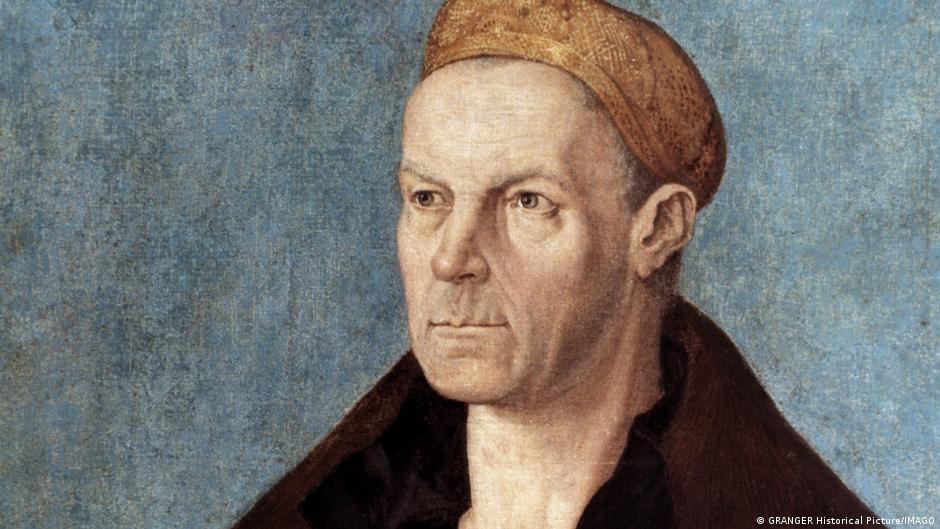
Introduction to Jakob Fugger
Jakob Fugger was a merchant from Augsburg, Germany, who is considered to be the first person to trade on a truly global level. He was born into a wealthy family and received his business training in Venice, Italy. Fugger’s career spanned the 15th and 16th centuries, a time when global trade was still in its infancy.
Global Trade in the 16th Century
During Fugger’s time, global trade barely existed. However, with the expansion of European control into South America during the reign of German Emperor Charles V, new trade opportunities emerged. Fugger was at the beginning of this phenomenon, which later became known as world trade. He took advantage of the discovery of America in 1492, which allowed merchants to travel west and establish trade routes with the New World.
Education and Business Training
Fugger’s education and business training played a significant role in his success. He learned double-entry bookkeeping in Venice, which was a breakthrough that accelerated his rise to wealth. At the time, there were no business schools, so merchant families sent their sons to apprenticeships. Fugger took the Venetian secrets, including double-entry bookkeeping, with him to Germany and was the first to use these modern methods.
Building a Business Empire
Fugger built an intelligence network of agents in major European cities and small German towns. People supplied him with information by courier and horses, which gave him an advantage over his competitors. He always knew where his finances stood, thanks to his careful records. Fugger also granted generous loans to the Emperors Maximilian I and Charles V, securing access to lucrative silver and copper operations in Tyrol and Hungary.
Copper and the Fugger Family
Copper consumption increased in Europe during Fugger’s time, driven by shipbuilding, weapons, cookware, and monumental architecture. The Habsburgs and the Hungarian crown often repaid their debts by granting mining rights, which benefited the Fuggers. Fugger ensured that powerful but heavily indebted borrowers continued to pay by making himself indispensable. He was the only one who could raise money quickly when Emperor Maximilian needed it.
Legacy of Jakob Fugger
Fugger changed European finance by convincing the Pope to relax the Catholic Church’s ban on interest rates, paving the way for modern lending practices. He shared in the church’s revenues, including the sale of indulgences used to finance St. Peter’s Basilica in Rome. Fugger’s most visible legacy is the Fuggerei, the world’s first social housing complex, founded in 1521. It is still in operation today, and residents pay only a small rent. Historians estimate Fugger’s total assets at the equivalent of 300 to 400 billion US dollars, which was between 2% and 10% of Europe’s total economic output.
Comparison to Modern Philanthropists
While modern philanthropists like Bill Gates work to shape their legacies through foundations, corporate historians believe that they are unlikely to achieve Fugger’s long-term impact. Fugger’s legacy will not be surpassed by today’s wealthy individuals, including Elon Musk or Jeff Bezos, whose wealth is significant but not as impactful as Fugger’s. The Fuggerei remains a tangible symbol of Fugger’s influence, and his legacy continues to inspire and fascinate people around the world.
