

Introduction to Language Shift in Ukraine
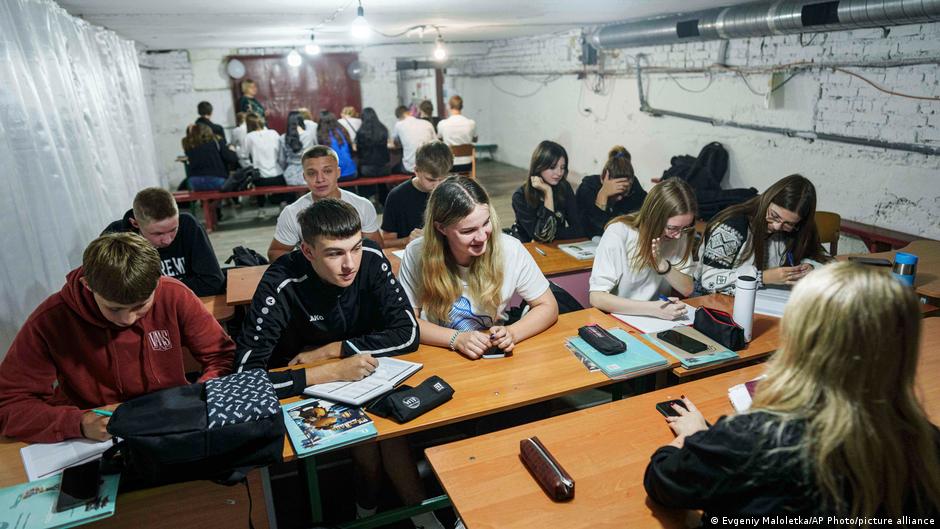
After Russia’s full-scale invasion of Ukraine in February 2022, many Russian-speaking Ukrainians consciously decided not to use Russian in daily life and to speak only Ukrainian. Over time, this initial emotional impulse appears to have faded, and some Russian-speaking Ukrainians have returned to their old habits. A significant part of young people in schools and sometimes even teachers continue to speak Russian to each other.
Increase in Ukrainian Language Use
The use of the Ukrainian language in schools continues to increase, according to a study conducted by the State Service for Educational Quality of Ukraine and the Commissioner for the Protection of the Ukrainian Language in April and May 2025. About 48% of students surveyed in Ukraine, a bilingual country, said they communicated exclusively in Ukrainian, an increase of 7 percentage points from the previous school year.
Regional Variations
However, the finding does not apply equally to all regions. In Kiev, the capital of Ukraine, there is a negative trend: the proportion of students who only speak Ukrainian has fallen by 10 percentage points to 17%. Oksana, a teacher at a school in Kiev, noted that "In class, the children speak Ukrainian, but when the bell rings, they start speaking Russian among themselves." She also mentioned a boy who wants to speak Russian in class because his family speaks Russian, and he has difficulty understanding Ukrainian.
Language Use Among Students
Iryna, a student from another school in Kiev, had a similar story to tell. “Most of the girls in our class speak Ukrainian, but almost all the boys speak Russian,” she said. She herself spoke Ukrainian both at home and at school but occasionally speaks Surzhyk, a language that combines Russian and Ukrainian and is widespread in certain regions.
Factors Influencing Language Use
Olena Ivanovska, Commissioner for the Protection of the State Language of Ukraine, attributed the decline in the use of Ukrainian among Kiev students to the fact that there are a high number of internally displaced people from the eastern regions of Ukraine, which traditionally have the largest number of Russian speakers. Oleksiy Antypovych, a sociologist and head of the Rating Group, a Ukrainian research organization, was not surprised that so many people appeared to speak Russian in the Ukrainian capital, citing a study by his institution that found around 50% speak Ukrainian, almost 20% speak Russian, and 30% speak both languages.
Creating a Ukrainian-Speaking Environment
Ivanovska believes there is still a lot of work to be done to create a Ukrainian-speaking environment outside of the classroom. "Patriotism alone is not enough. It takes the will of the state and a consistent policy regarding the language that teachers and school administrators speak." Therefore, she believes it is essential that parliament adopts the bill to ensure a Ukrainian-speaking environment in educational institutions.
Need for Ukrainian-Language Content
Valentyna, the mother of a seventh-grader at another Kiev school, believed there was another reason why so many students spoke Russian: the dominance of Russian-language content on YouTube and social media. Andriy Shymanovski, a Ukrainian blogger, also said that Russian-language pop culture has a massive influence on children. "We don’t have any Ukrainian children’s bloggers who create cool content about experiments, pranks, and challenges," he said, emphasizing the need for a wide variety of content in the Ukrainian language, not just academic stuff.
