

Introduction to Russia’s Political Prisoners
In a social media video, a young Russian teenager protests alone by displaying anti-government slogans that read: "Freedom for political prisoners" or "I am against Putin." We can immediately feel that this boy, Arseny Turbin, who was only 14 years old at the time, was committed to social justice. But few would imagine that his courageous, if somewhat naive, activism could in any way threaten Russian President Vladimir Putin’s power.
The Crackdown on Dissent
In Russia, such posts – even if they don’t go viral – obviously pose enough of a threat to attract the attention of the authorities. Turbin is currently serving a five-year prison sentence, making him one of Russia’s youngest political prisoners. In Russia, political prisoners are called “politzek”. The term gives its name to a new documentary about the country’s silenced dissidents.
The Documentary "Politzek: Voices that Defy the Kremlin"
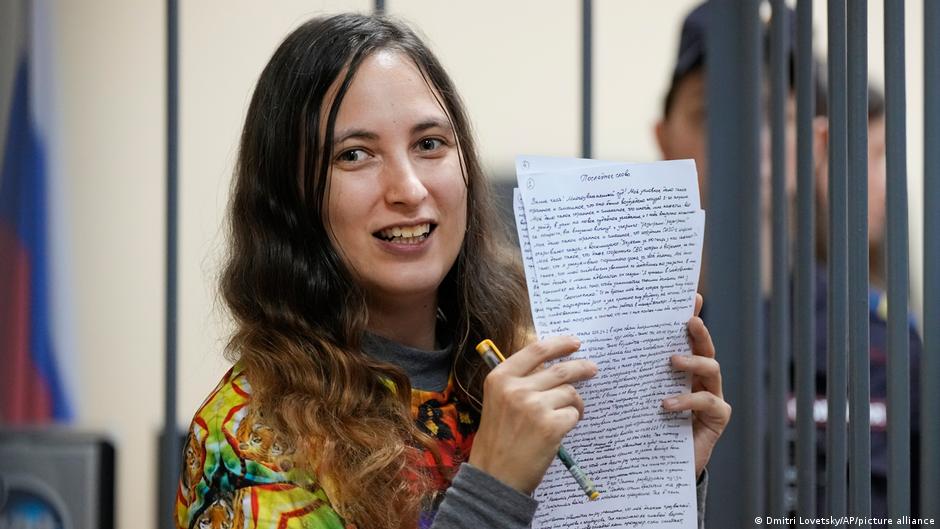
The documentary was directed and written by a team of filmmakers and secretly filmed over a period of almost a year. The focus is on the personal stories of the prisoners and the campaigns of families and friends for their release. The documentary follows the fate of several dissidents, including Russian artist Sasha Skochilenko, who was sentenced to seven years in prison for replacing price tags in supermarkets with stickers criticizing Russia’s war in Ukraine.
Released as Part of a Prisoner Exchange
Sasha Skochilenko and Oleg Orlov, co-founder of the human rights organization Memorial, were both released in August 2024 as part of a major prisoner exchange between Russia and Western countries. However, many more dissidents are imprisoned. According to independent observers, there are currently 1,586 political prisoners in Russia.
The Absurd Process
Among them are two other women portrayed in the documentary, theater director Zhenya Berkovich and playwright Svetlana Petriychuk. They were found guilty of “justifying terrorism” through a play they staged in 2021. The production, which had a clear anti-terror tenor, won two Golden Masks – Russia’s most prestigious national theater award – and was also supported by the Russian Ministry of Culture. Nevertheless, Berkowitsch and Petrijtschuk were each sentenced to six years in prison.
The Harsh Conditions in Russia’s Penal Colonies
Meanwhile, Arseny Turbin, now 17, remains in prison. He was moved to a penal colony in Perm, more than 1,800 kilometers from his hometown of Livny – making it even more difficult for his mother Irina Turbina to visit him. The film also offers a glimpse into the harsh conditions in Russia’s penal colonies through the work of Anna Karetnikova, a human rights activist and former senior analyst at the Moscow Federal Penitentiary Service.
The Power of a Support Network
“Politzek: Voices That Defy the Kremlin” also highlights the crucial work of exiled Russian dissidents who advocate for and help political prisoners incarcerated in their home country. Sending letters of moral support to prisoners also proves vital, reminding them – and the Russian regime – that they are not forgotten. Such a support network might have prevented the tragic fate of Pavel Kushnir, an accomplished pianist who studied at the Moscow Tchaikovsky Conservatory and died in prison after going on a hunger strike.
Legacy of Resistance
Like prominent Putin critic Alexei Navalny, who also died in a penal colony, these activists – even in death – leave a legacy of resistance among the many who hope to see their country freed from authoritarianism. The documentary will be available on several platforms, including YouTube, in different languages, starting from December 6th.
