

Germany’s Industrial Future
Germany has been warned for years that it risks becoming an “industrial museum” if it does not radically modernize – and that includes artificial intelligence (AI). Productivity in Europe’s largest economy has barely grown in 15 years, the export share of cars and machinery is shrinking and Germany’s energy costs are among the highest in the G7 group of wealthy nations.
The Need for Modernization
Taken together, this has created a toxic mix that is steadily undermining the country’s global competitiveness. Policymakers and business leaders believe there is a narrow window of opportunity to reverse the downward trend by fully adopting AI in factories and supply chains, helping the country catch up with the world’s two biggest players, the United States and China.
The Role of AI in Germany’s Future
At the inauguration of Europe’s first exascale supercomputer Jupiter, Chancellor Friedrich Merz noted that the two world powers are in a "head-to-head race for future market share in an AI-powered global economy.” The US and China have advanced AI models such as ChatGPT and DeepSeek, advanced chips and industrial-scale data center stress testing. Their initial testing proves that their systems can handle mission-critical AI workloads without downtime.
Endless AI Pilot Projects
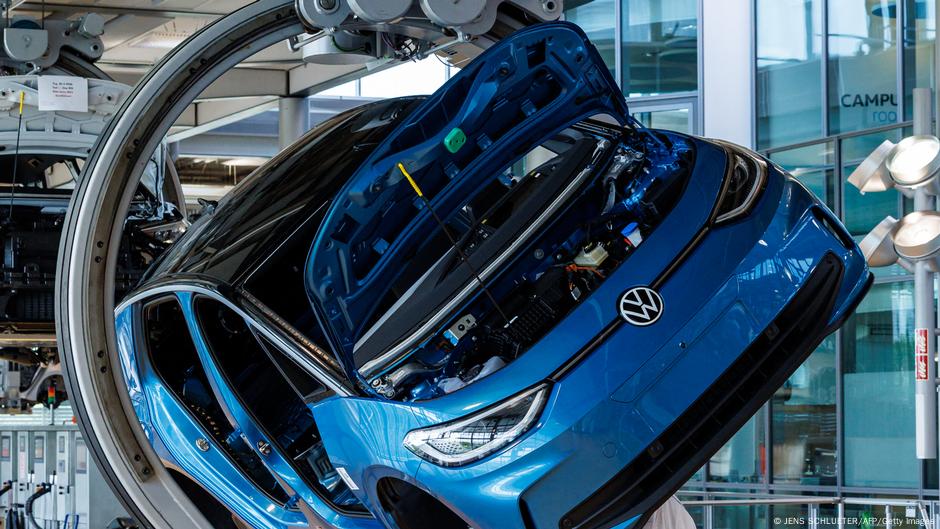
German industrial giants, meanwhile, are accused of being trapped in so-called pilot purgatory, experimenting with AI but reluctant to fully implement ambitious projects. Bosch, for example, introduced generative AI pilots in its factories in late 2023 to optimize production planning and monitoring. Volkswagen, in collaboration with Siemens, has tested AI-driven digital twin factories – virtual replicas of production lines that allow engineers to simulate, predict and improve performance.
Challenges Facing AI Adoption
Although these projects have been praised as innovative, until recently they were still limited to limited trials rather than full or partial deployment, often for legal and security reasons. Many companies still lack clear AI strategies and change management capacities. The German Ministry of Economic Affairs predicts that AI could provide at least an additional percentage point of annual real GDP growth from 2026.
Talent and Chip Shortages
Not only are German companies competing globally for the best tech talent and the high-end chips needed for AI, but they also remain risk-averse given high upfront costs and a corporate culture that always values caution over disruption. They also have to contend with regulatory uncertainty, particularly with regard to the European Union’s AI law, which critics say is overly complex, vague in its definitions, and sets strict compliance rules for applications deemed high-risk.
Progress and Successes
Despite the many hurdles, the introduction of AI in Germany is progressing rapidly. According to a survey published in May by the Ifo Institute in Munich, 41% of companies now use AI in their business processes – an increase of 27% compared to the previous year. Almost one in five companies plan to introduce it soon. The German industrial leaders are clearly setting the pace; more than half are already using AI.
Job Market Concerns
Beyond the uneven acceptance, the survey reveals a looming challenge in the job market. More than a quarter of German companies assume that AI will lead to job cuts in the next five years, while only a small minority expect to create new jobs. German companies find it difficult to find specialists to work with this type of technology – in fact, the rate is one of the highest in the EU.
Growing Successes
Germany may be cautious about fully adopting industrial-grade AI, but one of its economic giants is already shaping the global infrastructure behind the current AI boom. Siemens is an important part of Europe’s “Data Center Four” — who provide the automation systems, power grids and cooling technologies that ensure the reliable operation of hyperscale AI facilities. The German automotive industry is also introducing AI on a large scale: according to the ifo survey, more than 70% of automobile manufacturers and suppliers are already using it in production.
Future Prospects
The faster German companies adopt AI, the greater the profits are likely to be, helping to solve some of the country’s biggest problems. A 2023 report by management consultancy McKinsey predicted annual productivity growth could increase by up to 1.5% over the next decade, while annual GDP could rise by up to 450 billion euros ($520 billion) and German factories could use a quarter less electricity. While Germany is well ahead of the rest of the EU in AI adoption, the country’s progress is expected to continue to be limited by ongoing skills shortages and the push to train new workers amid rapidly evolving technology.
