

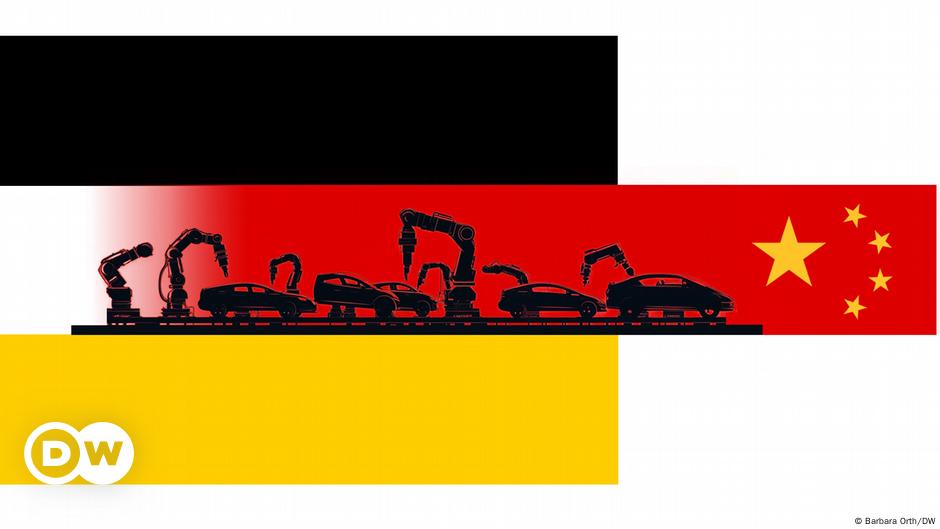
Introduction to the China Conundrum
For Matthias Rüth, there is no question of turning his business away from China – despite increasing government warnings about the risks of investing too much in the country. As managing director of Frankfurt-based rare earths and raw materials trading company Tradium, China remains central to the business as the country almost completely dominates the increasingly important rare earths sector.
The Dominance of China
Since China covers more than 95% of the market for rare earths, it cannot be replaced in a short period of time. These are long-standing and reliable trading relationships, the materials and processes are tried and tested. For Rüth and many other companies in Germany, China remains an obvious business location. The federal government has fully supported and promoted this position for a long time.
Shift in Geopolitical Situation
However, the country’s authoritarian transition under President Xi Jinping – which led to China supporting Russia after the invasion of Ukraine – has transformed EU-China relations. The geopolitical situation has shifted and the federal government has been talking about “risk reduction” for several years, reducing dependencies on a single country for components, goods or raw materials from China, not least because of the risk of foreign companies being exposed to harsh measures by the Chinese authorities.
Government Warnings
Chancellor Friedrich Merz recently said of German companies working in China: "I always tell them when I meet them: ‘This is your risk, if something goes wrong, please don’t come to us.’" Earlier this week, German Finance Minister Lars Klingbeil visited China to discuss the two countries’ developing economic relations. In Beijing, he said that Germany sees “fair competition at risk and also sees jobs in industry at risk,” but emphasized the need for dialogue: “We have to talk to China, instead of about China.”
A Complex Relationship
It is obvious that German industry finds it difficult to exit its relationship with China, and for good reason. Earlier this week, China overtook the US to once again become Germany’s most important trading partner. Trade between the two countries reached 185.9 billion euros between January and September this year. For decades, leading German industrial giants have prioritized the huge Chinese market and investment volumes remain high.
Investment and Trade
According to a recent study, German foreign direct investment accounted for 57% of total EU investment in China in the first half of 2024, about 2.3% of German GDP. It points out that the investment volume continues to grow and that business investments will increase by 1.3 billion euros between 2023 and 2024. One of the sectors in which Germany and China are most closely intertwined is automobile manufacturing. Some of Germany’s biggest automakers, such as Volkswagen and BMW, have invested and made billions in China over the years, and despite severe recent troubles, they still harbor hopes of long-term success.
Challenges in the Automotive Sector
BMW recently invested 3.8 billion euros in a battery project in the city of Shenyang, and the company has no major plans to leave the country. However, the relationship is changing fundamentally – and not just for geopolitical reasons. The intense competition that German automakers are currently facing from Chinese competitors, and the perception that some of this competition has been achieved through Chinese industrial practices, is undermining global trade rules. It is crucial that there is a level playing field and a level playing field on both sides.
Market Pressures
Despite China’s continued importance for the German economy, financial pressure is coming from all sides. German exports to China have fallen 25% since 2019, while major German automakers Volkswagen, Mercedes and BMW have seen their market shares fall sharply in recent years as China ramps up its own production of electric vehicles. The necessary risk reduction is being vigorously promoted and implemented by companies in the automotive industry, but this must also be politically enabled and not just demanded.
The Reality of Market Pressures
You have to keep in mind that your business contacts in China are also affected by the geopolitical tensions, says Matthias Rüth, a rare earth dealer. The current difficulties are mainly due to political decisions, not to the suppliers themselves. His business was particularly affected by China severely restricting rare earth exports, which also frustrated his suppliers. For a supplier like us, this means that traditional procurement routines no longer work as reliably as they used to. We continue to trust in our long-standing Chinese partners, because for many materials there is no way around China.
Rethinking Sourcing Strategy
Still, he notes that his company is investing more time and effort into establishing delivery options outside of China. This is not about politics telling us what to do. It is the market that is forcing every reputable trader and raw material processing company to rethink their sourcing strategy – and this pressure will only increase. This is the daily reality.
