

Introduction to Alternative Burial Methods
A massive rock face rises above a small plateau in the southern Haute-Provence region of France. There are a few stones lying in the grass at its base, looking as if they fell there by accident. Beneath them rest the ashes of a young man – it was his favorite place – where his family has decided to let him rest in peace. This would not be possible in Germany.
Traditional Burial Laws in Germany
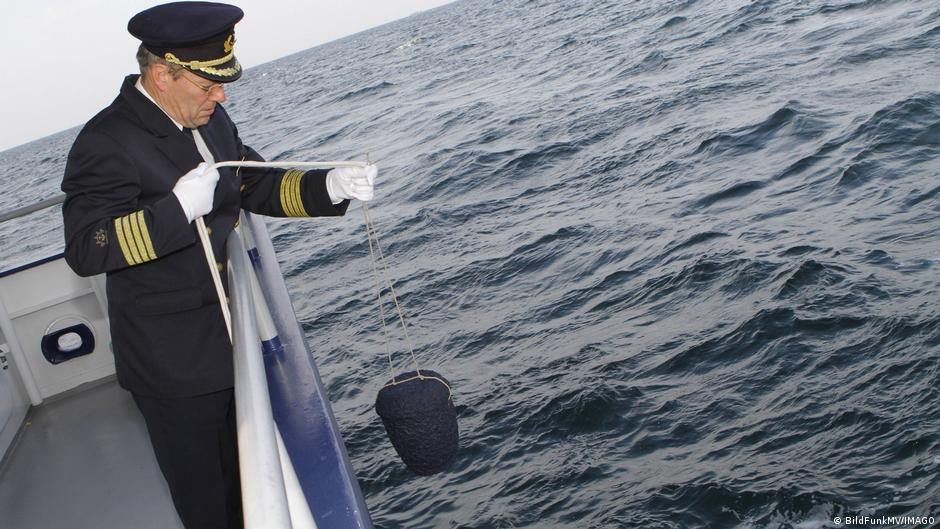
German law generally requires that the dead be buried in a recognized cemetery, a burial forest or a designated section of the sea. Storing an urn in the garden is also not permitted. Nor does it mean scattering the ashes of a loved one to the wind.
Exploring New Ways to Say Goodbye
While funeral rules are strict in Germany, people in other countries are exploring new ways and places to say goodbye. In Switzerland, some mourners scatter their ashes on alpine meadows and rocky outcrops. There and in the Netherlands, ash can also be released from a hot air balloon. Once the balloon reaches the chosen location, the ashes are scattered in the wind and the coordinates are later sent to the family along with a certificate. Another option is to say goodbye to a small plane.
Innovative Funeral Options
Some US companies are offering an even grander farewell, sending a small portion of ash into space. A legal gray area also makes this possible for Germans, as most remains do not leave the earth and are buried in an urn. More and more companies are also offering memorial or cremation diamonds. Over several months, carbon extracted from a person’s ashes or hair is pressed into synthetic diamonds that can be incorporated into jewelry.
The Trend Towards Sustainable Funerals
The possibilities are expanding for people who value sustainability even when they are dying. Environmental awareness is increasing significantly across Europe. New cemeteries are being built in Scandinavia and the Netherlands that rely on natural materials and environmentally friendly design. Natural and environmentally conscious burials are becoming increasingly important throughout Europe. In meadows and forests, the dead are buried in biodegradable coffins that are made without paint or metal, without embalming or chemical additives.
Environmental Concerns in Cremation
Environmental concerns also shape cremation. According to the Cremation Facilities Quality Association, 81% of burials in Germany in 2024 were cremations. Modern crematoria now use heat recovery systems and funeral homes are increasingly offering biodegradable urns. These urns are often used in tree burials in forest cemeteries, where graves blend naturally into the landscape.
Human Composting: A Natural Option
Some funeral homes now offer a more natural option called human composting. The body is placed in a cocoon made of straw, hay, flowers and a small amount of biochar. After a few days, a gentle, cradle-like mechanism rocks the cocoon at regular intervals, ensuring even moisture distribution. Natural microorganisms in the body break down the remains in conjunction with the plant material into fine soil in about 40 days. A biological air filter prevents odors. The remaining bones are ground into a fine powder and mixed into the soil.
Powdered in Shock Freezing: An Alternative Method
Swedish biologist Susanne Wiigh-Masak is considered a pioneer of another environmentally friendly burial method – promession. The body is first flash-frozen at minus 18 degrees Celsius and then immersed in liquid nitrogen at minus 196 degrees. The extreme cold makes the body so brittle that even slight vibrations cause it to crumble into fine powder. Moisture is removed in a vacuum chamber and any metal – such as dental fillings – is removed. The remains can then be placed in a small, compostable coffin made from corn or potato starch and buried in the ground.
The Significance of Burial Methods
The way people are buried says a lot about their way of life. Between an ornate grave and a tree root lies not only an aesthetic difference, but also a shift in the way societies think about religion, property and nature – and ultimately in the way we remember our dead.
