

Discovery of Hidden Treasures
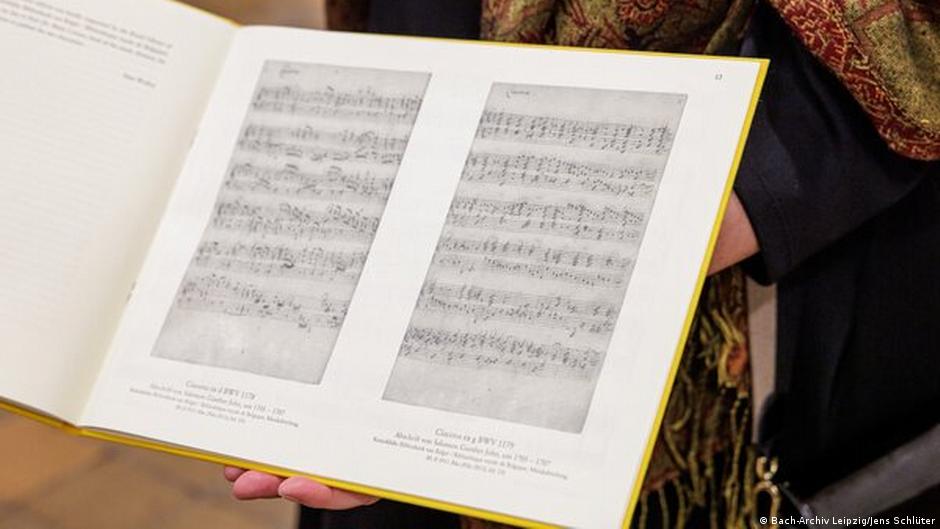
Peter Wollny has known the Ciacona in D minor and the Ciacona in G minor for more than 30 years – ever since he discovered the organ works in the Belgian Royal Library. The handwritten manuscripts came from an unknown author – undated and unsigned. But Peter Wollny, now head of the Bach Archive in Leipzig, had the feeling that his discovery could actually be a hidden treasure composed by Johann Sebastian Bach.
The Search for Clues
His meticulous search for clues began. “To confirm the identity of the pieces, I searched for a long time for the missing piece of the puzzle,” he remarked at the official ceremony handing over the newly discovered works. “Now we have the bigger picture.” The two secular organ works have now been performed again for the first time in 320 years. They were performed in the Thomaskirche in Leipzig – where Bach was cantor for 27 years, from 1723 until his death in 1750 – by the renowned organist and conductor Ton Koopman.
Stylistic Features
Stylistically, many musical references pointed to Bach. For example, the melodic accompaniment in the bass, which suddenly jumps to a higher register, or the extended fugues. The musicologist Peter Wollny attributes these stylistic features to Bach as unique. He was able to uncover even more clues while working on a project about Bach’s family for the Saxon Academy of Sciences. He found a letter that helped him identify the scribe who copied the works. A close examination of the manuscript quickly confirmed that it was Salomon Günther John – one of Bach’s students.
The 75th Anniversary of the Bach Archive
New pieces by Johann Sebastian Bach are rare. The discovery was described as a gift: “It is a wonderful interplay of excellence, science and passion for music.” While the new works remain in the Royal Library of Belgium, Peter Wollny told that the Bach archive holds even more treasures. “I am very proud to be able to say that we have the second largest collection of Bach manuscripts in the world after the Berlin State Library.” The archive’s most valuable possessions are the original scores of Bach’s choral cantatas for the Thomaschor.
Every Discovery is a Breakthrough
One of the Bach Archive’s most important projects is the New Bach Edition, developed together with the Bach Institute in Göttingen. From 1951 to 2007, researchers from all over the world worked on over 100 music collections. The historical-critical edition of Bach’s complete works includes additional texts on the history of the work and research sources. The New Bach Edition project led to another breakthrough: the dating of Bach’s famous Leipzig cantatas. The manuscripts had not been dated by Bach, but by examining watermarks in the sheet music and his letters at the time, researchers were able to determine when the pieces were written.
The Berlin Singing Academy in Kyiv
After World War II, many of Bach’s scores were scattered around the world or disappeared altogether. Since the 1990s, some sheet music and collections have found their way back to Leipzig – including the archive of the “Sing-Akademie zu Berlin”, which was rediscovered in Kiev in 1999. The Russian army brought the pieces back to the Soviet Union. The collection contains pieces from Bach’s family – in particular his son Carl Philipp Emanuel Bach – that remained unfinished until then.
Kulukundis Collection
Even when it comes to discovering new treasures, good relationships pay off. The musicologist Peter Wollny has had a long-standing relationship with the New York collector Elias Kulukundis. As the owner of a shipping company and music expert, he has specialized in works from the transition period from the 18th to the 19th century. The collection had already been on loan in the Bach archives for ten years. On the anniversary of the house, it was officially donated by Elias Kulukundis. With a value of around 12 million US dollars, his collection is the most valuable donation the Bach archive has ever received.
Unsolved Bach Mysteries
Numerous mysteries surrounding Johann Sebastian Bach’s work remain unsolved. Many of his librettists are still unknown today. By no means all of the copyists who wrote Bach’s music have been identified. However, with this new discovery another copyist was discovered: Salomon Günther John. For a long time, little was known about the women in Bach’s family. In 2024, the Bach Museum dedicated itself to the history of the women in the Bach lineage, as they also contributed significantly to the family’s flourishing musical legacy. Many important manuscripts were lost during the Second World War and have not been recovered to this day. “A lot was found again,” said Peter Wollny – like the discovery in Kiev.
