

Introduction to Superheroes
Superheroes don’t have it easy. In their never-ending battle against evildoers, they must contend with supervillains while selflessly putting their own needs aside. At least they come out of all their fights safe and sound thanks to their superpowers. They can fly, are extremely strong, or maybe have a few other awesome tricks up their sleeves. There are very different explanations for their special abilities.
Origins of Superpowers
Superman, for his part, is from the planet Krypton, meaning he’s actually an alien who just happens to look like a human. He was brought to Earth by a spaceship as an infant and derives his superhuman strength from the sun, which charges him, and from the low gravity of his adopted home planet. Meanwhile, Spider-Man was bitten by a radioactive spider, giving him his "spider sense" and the ability to climb walls. Sometimes genes help too – like with Wonder Woman, the daughter of an Amazon and a god.
Historical Roots of Superheroes
“All the characters we see in comics and films today actually have their origins in ancient times or even further back,” says archaeologist Michael Merkel. The deities of Greek and Nordic-Germanic mythology had amazing powers: "There’s Zeus, who throws lightning, or Neptune, who can trigger storm surges. Thor, the god of thunder, can conjure up storms." The pharaohs also portrayed themselves as superheroes – as sons of the sun god, who is responsible for the light in the world.
Superman, the Moral Crusader
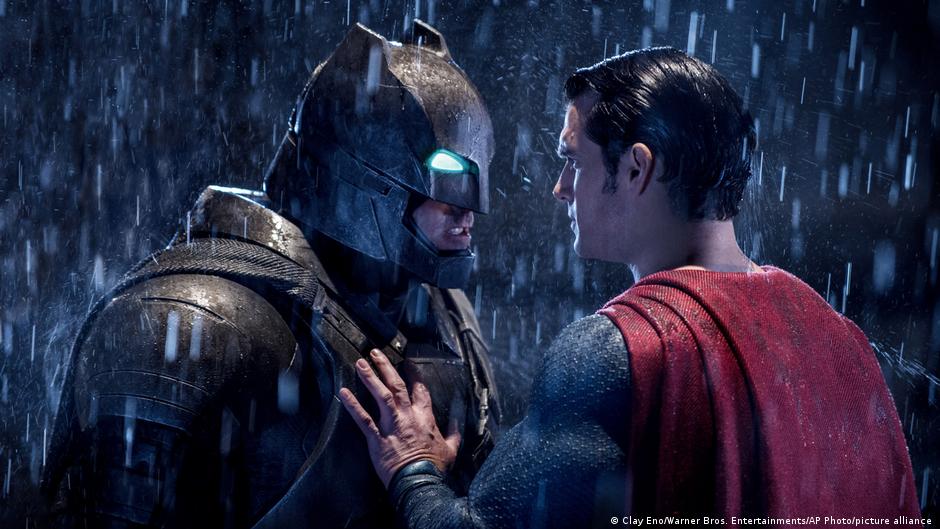
When people think of superheroes, they generally don’t think of gods and goddesses so much as the action figures they remember from their childhood. Superman was the first superhero to achieve worldwide fame. It came into the world in 1938 with the publication of Action Comics #1. With his red cape and muscles bulging from his tight body suit, he fights for justice – anywhere, anytime – and clearly has a noble streak about him. “Many superheroes emerged at a time that was characterized by strict American morals,” says Merkel. "They wouldn’t do anything illegal. They always had to be ‘clean’ and decent."
Deities that are All Too Human
If comics had used Greek gods and goddesses as models, Superman certainly wouldn’t have been quite as virtuous. After all, Zeus, Heracles, Hera, and Co. were not concerned with following a moral compass. On Mount Olympus, envy, greed, sexual excess, anger, and revenge were the order of the day. Zeus, the king of the gods, for example, constantly cheated on his wife Hera, and his son Heracles was conceived through one such escapade.
No Violence? Not an Option
They may try to show decency in their behavior, but modern superheroes are anything but pacifists – violence is a more than legitimate means of fighting evildoers. This also applies to Wonder Woman, also known as Diana, who was created in 1941 and was the first woman to fight for freedom and justice in a comic with her lasso of truth and indestructible bracelets. She was the quintessential World War II pin-up girl.
Diversity in the World of Superheroes
Wonder Woman wouldn’t end up being the only major female character in the ever-expanding superhero universe. The variety of heroes has become more and more diverse. T’Challa, also known as Black Panther, appeared in 1966 as the first black superhero in mainstream American comics. In 1975, the black mutant Storm, raised by witch-priestesses in Africa, made her debut and joined the X-Men team. Her teacher, the telepath Charles Xavier, uses a wheelchair.
Conclusion
“Basically there are stories of superheroes in all countries,” says Michael Merkel – from Asia to Africa, from Europe to America. And he sees these superheroes as urgently needed: "I think there are still so many supervillains in the world. And that’s why we need heroines and heroes who give us hope." The exhibition "Myth superheroes. From Heracles to Superman" can be seen in the Archaeological Museum Hamburg until April 26, 2026.
