

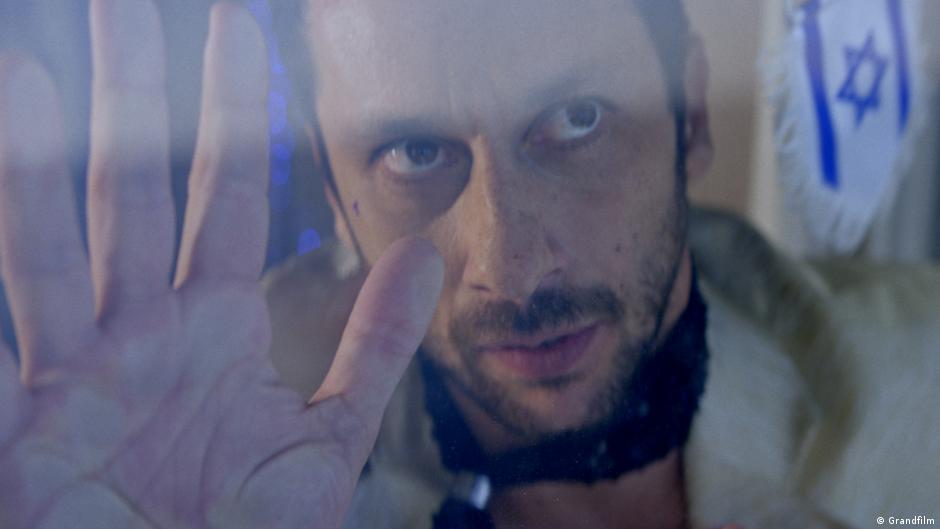
Introduction to Nadav Lapid’s Film
Israeli filmmaker Nadav Lapid rose to international prominence by tackling the grievances of his home country in films such as “Synonyms,” which won the Golden Bear in Berlin in 2019, and “Ahed’s Knee,” which won the Cannes Jury Prize two years later. He had vowed that his next film would not be about Israel. His script, titled “Yes,” was ready for pre-production; he was already thinking about recruiting potential Hollywood actors to play the lead roles of two artists who sell their art, soul, and body to the rich and powerful.
A Change in Plans
But then October 7, 2023, happened. The Paris-based Israeli filmmaker returned to his home country shortly after the Hamas terrorist attacks. He felt deep compassion for the torment of his family and friends, but was also able to predict, based on the language of politicians at the time, that the state’s revenge would reach "biblical proportions." Lapid changed his script within weeks to reflect the unfolding events. “The movie was happening all around me,” he said.
Reacting to Madness with Madness
The resulting work serves as a witness to a specific moment in history, says the filmmaker. At the same time, it is a “feature film on steroids”; a work that “responds to madness with madness,” as Lapid describes it. But even the most satirical and experimental scenes seem to Israelis like "a neorealist film," says the filmmaker. Computer-generated images were not needed to illustrate what was happening in Gaza; a series of real images of the bombed Palestinian enclave are shown in the background, while two Israelis make out from a hill next to the border.
The Making of the Film
Such scenes were filmed without permission, and the entire production was filmed under the radar, says Lapid. He had a difficult time finding a cast and crew willing to work on the film. The main character, Ariel Bronz, is a provocative performance artist who made headlines a few years ago for hanging an Israeli flag on his buttocks during a show about freedom of expression. Although "Yes" was partially financed by the Israeli state, the country’s major distributors refused to cover the film, including the one that had distributed Lapid’s previous films.
When a Selfish Elite Supports Nationalist Ideology
Y. and Jasmine, the main characters of “Yes,” are struggling artists by day and debauched entertainers by night. Their performance is an insider tip shared by Tel Aviv’s super-rich: Hire the couple to perform amidst your chosen guests, cocktails, and artwork, and your party will become an orgiastic event pulsating with Eurotrash beats. One of the works of art featured in the opening sequence party is George Grosz’s Pillars of Society (1926), a painting that depicts the German elite as grotesque and selfish supporters of nationalism.
The Inspiration Behind the Film
With his satire, Grosz provided an early judgment on the state of Germany’s institutions, prophetically prophesying how support for corrupt and hypocritical institutions would pave the way for the rise of Nazism and a future of unprecedented destruction. "The painting was the genesis of the film," the Israeli director said. Nadav Lapid recalls being obsessed with the artwork as a young child and points out that the painting’s style shapes his vision of cinema, which he describes as "modern expressionism."
An Incendiary Video at the Heart of the Film
The resulting anthem, composed by Y., is revealed through a video in which Israeli children casually sing lyrics that predict a genocide in Gaza within a year: "In another year, there will be nothing left there" and "We will destroy them all." The anthem has a disturbing real-life backstory. This video was actually released in November 2023 by a PR firm headed by Ofer Rosenbaum, founder of “The Civilian Front Movement,” which claims on its website to be “apolitical” and whose stated goal is to restore support for the Israeli army. Lapid openly admits that his “yes” proposal is more radical than any petition from pro-Palestinian organizations.
