

Introduction to Finland’s Energy Transition
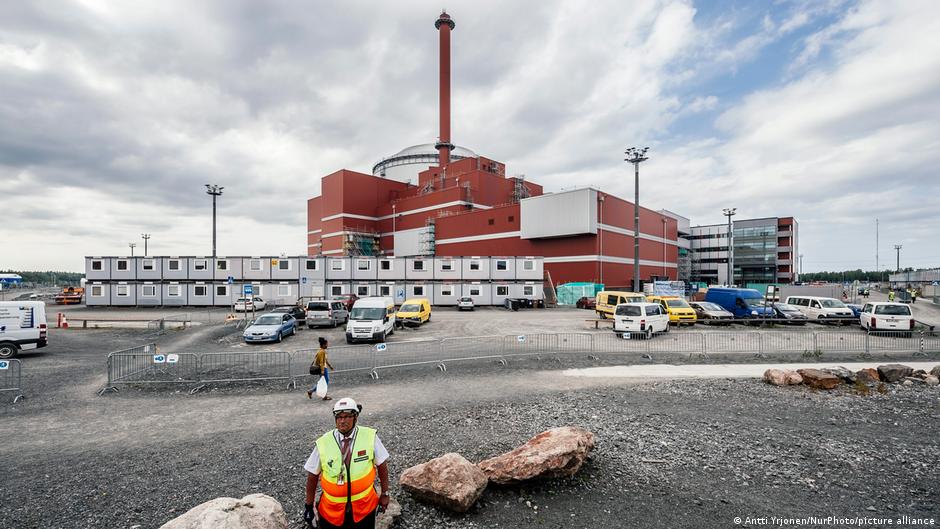
The island of Olkiluoto on Finland’s west coast was once just an energy hub for the country that borders Russia. But with the start of Russia’s full-scale invasion of Ukraine in February 2022, it became strategically important as Helsinki decided it could no longer rely on Russian energy. Until then, the country received half of its energy imports from the neighboring country, with which it shares a 1,300-kilometer border. This included electricity, oil, and natural gas deliveries.
Shift in Energy Policy
“Before 2022, there was the optimistic hope that we had left behind an era that was all about expanding territories and invading sovereign countries, and that we could live happily in peace and trade," says Sari Multala, Finland’s Minister for Climate and Environment. "But then we understood that this is not the case and that we have to pay attention to our own sovereignty, even when it comes to energy. We cannot rely on a hostile partner," she told DW. Helsinki gave up its previously neutral stance and announced that it would join the Western defense alliance NATO. Moscow cut off Finland’s electricity supply, allegedly because Helsinki refused to pay for it in the Russian currency, the ruble.
Diversification of Energy Sources
Russia’s share of Finnish energy imports has now fallen to almost zero. Oil, which accounted for 19% of Finland’s energy consumption in 2019, is now imported from Norway, the United Kingdom, and the United States. Natural gas, which then made up 5% of the country’s energy mix, is imported in its liquefied LNG form. Meanwhile, Finland’s state-owned company Gasgrid Finland has commissioned a new floating LNG terminal in the southern port of Inga.
Nuclear Energy and Renewable Energies
Finland’s new Olkiluoto 3 nuclear reactor is one of the largest in the world with a total capacity of 1,600 megawatts (MW) and has increased Finland’s nuclear share of electricity production from 28% in 2022 to 39% now. But that came at a price. The price of Olkiluoto 3 has almost quadrupled to 11 billion euros ($12.7 billion). Construction took 18 years instead of four as originally planned. The skyrocketing costs led operator TVO to cancel its plans for a fourth reactor on the island of Olkiluoto.
Benefits of the New Reactor
"Consumers benefit from low electricity prices. And we have created 5,000 direct and indirect jobs," said Juha Poikola, a TVO spokesman. But other sources of electricity also contributed to the energy transition in Finland, especially renewable energies. In 2024, onshore wind farms accounted for 24% of the country’s electricity production, compared to 14% in 2022.
Expert Insights
For Veli-Pekka Tynkkynen, professor at the Finnish Center for Russian and East European Studies, renewable energy is the way forward, as nuclear power, biomass, hydropower, and wind energy would make the Finnish model “resilient”. "But building new nuclear power plants is very expensive these days due to high safety standards. And we should say goodbye to fossil energy. It’s not a good idea to be dependent on autocratic countries," he said.
Other European Countries’ Energy Transition
Thijs van de Graf, associate professor of international politics at Ghent University in Belgium and an expert on energy policy, agrees that the right mix is crucial. "Most European countries looked for other energy sources after the start of Russia’s large-scale invasion of Ukraine," he said. “The recipe for energy security includes energy efficiency, electrification, and renewable energy.” He added that this is particularly the case in countries where political interest in nuclear power is not as strong as in Finland.
Nuclear Waste Management
Pasi Tuohimaa is communications manager at Posiva, a company owned by TVO and Fortum that specializes in the final storage of spent nuclear fuel in the Onkalo storage facility on the power plant site. Posiva plays a crucial role in ensuring the safety of nuclear waste management in Finland. The Onkalo site will be the world’s first deep geological repository for spent nuclear fuel. The operator Posiva has so far spent between 500 million euros and one billion euros on the storage facility, which includes 60 kilometers of tunnels around 450 meters deep below the earth’s surface.
Future of Nuclear Power in Finland
Finland’s Climate and Environment Minister Sari Multala says the Nordic country is currently "paving the way for more nuclear power." Speaking to journalists during the tour of the Posiva site, he said the government was currently "reviewing our nuclear energy legislation to allow for faster approval processes and to investigate whether nuclear power will require financial support or risk-sharing mechanisms in the future.”
Alternative Solutions
But Anni Mikkonen, executive director of industry association Renewables Finland, opposes the current government’s pro-nuclear policies and argues that wind farms could be completed much faster. "There is a really strong project pipeline to start building when power is needed. We could double onshore capacity within ten years," she said. She also said that Finnish electricity could be used for electric cars or exported to other countries, so that they could also become less dependent on Russian energy imports.
